September 22, 2026

Generator failure recovery for London homes and businesses: immediate safety steps, fault checks and when to call a qualified electrician for urgent help.








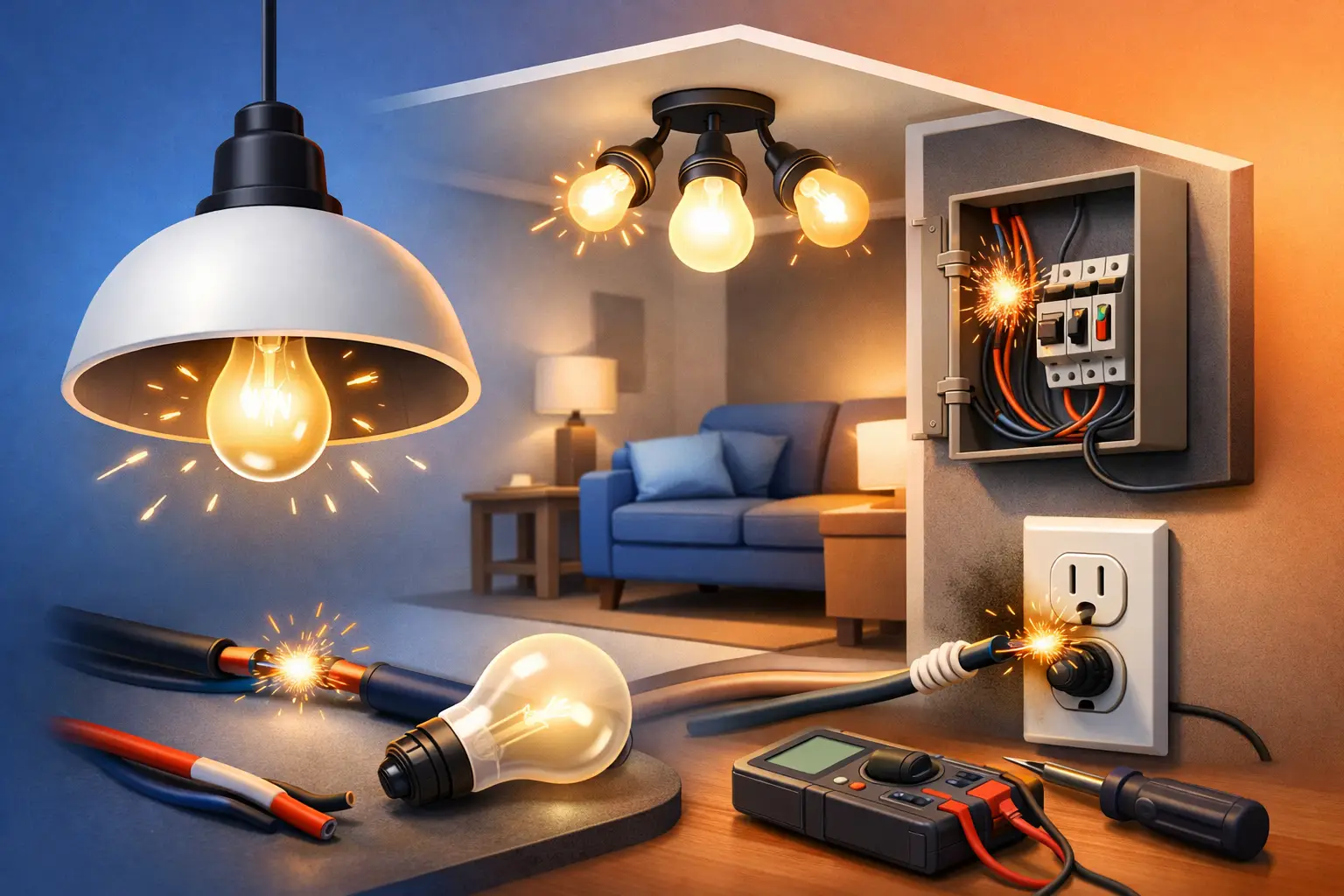
A light that flickers once when switched on can be irritating. A light that repeatedly dims, pulses or cuts out is different – it may be the first visible sign of a loose connection, overloaded circuit or failing electrical component. If you are asking, why do lights keep flickering, the useful first step is to establish whether the fault is limited to one fitting or affecting several areas of the property.
In London homes, flats, offices and retail premises, flickering can range from a simple lamp issue to a fault that needs prompt investigation. The pattern matters. A single flickering pendant usually has a different cause from lights changing brightness throughout the building when appliances start.
When the problem affects just one light, the cause is often local to the lamp, fitting, switch or dimmer. This is usually less urgent than whole-property flickering, but it still deserves attention if it persists.
A bulb that is not seated correctly can make intermittent contact and flicker. Turn the light off at the switch, allow the bulb to cool, and check that it is fitted securely. If the bulb has dark marks, rattles, or has reached the end of its working life, replace it with a suitable equivalent.
LED bulbs can flicker as they age too. Although LEDs generally last longer than traditional lamps, poor-quality products and overheated bulbs may fail early. Replacing one suspect bulb is a sensible first check. If the replacement behaves in exactly the same way, the issue is more likely to be in the fitting or circuit.
Not every LED bulb works with every dimmer. Older dimmers were commonly designed for higher-wattage halogen or incandescent lamps. When used with LEDs, they may cause fluttering, humming, flashing at low brightness or lights that will not switch off fully.
Check whether both the bulb and dimmer are marked as dimmable. Even then, compatibility is not guaranteed, particularly where several low-wattage LEDs are connected to an older dimmer. A qualified electrician can identify whether the dimmer needs replacing with an LED-compatible model or whether another issue is present.
If flickering changes when you touch the switch, move a lampshade, or open and close a door nearby, do not ignore it. Wear within a switch, a damaged lampholder or a loose connection at the light fitting can interrupt the circuit. Connections that repeatedly make and break can heat up, creating a potential fire risk.
Do not remove a fixed light fitting, switch plate or ceiling rose to investigate unless you are competent and the circuit has been safely isolated. This is a job for an electrician, particularly in older properties where previous alterations may not meet current standards.
Multiple lights flickering at once calls for more caution. It can indicate an issue on a circuit, at the consumer unit, or occasionally with the incoming supply.
A loose connection in wiring can cause inconsistent voltage to reach lights. This may happen in a junction, a switch, a lighting circuit connection or within the consumer unit. The concern is not just inconvenience: loose electrical connections can generate heat and damage insulation or equipment over time.
If lights across different circuits dim or brighten when a kettle, shower, oven, washing machine or other high-load appliance starts, there may be a voltage issue or an overloaded installation. Modern appliances place significant demand on older electrical systems. A property that has been extended, converted into flats, or adapted for home working may have electrical circuits that no longer suit how it is used.
Flickering accompanied by tripping circuit breakers, a buzzing consumer unit, burning smells, warm switches, scorch marks or crackling sounds should be treated as urgent. Switch off the affected circuit if you can do so safely, avoid using the affected equipment, and arrange an emergency electrician without delay.
Electrical faults are not always obvious from the outside. An electrician will assess the symptoms alongside the age, condition and layout of the installation. Common causes include:
The last point is less common, but useful to consider. If neighbours report similar symptoms, or street lighting and multiple properties appear affected, the issue may be outside your installation. An electrician can help establish whether the fault is internal before the distribution network operator needs to be contacted.
There are a few observations that will help narrow down the problem without taking risks. Note whether the flickering affects one lamp, one room, one circuit or the entire property. Think about when it happens: continuously, only when dimmed, when a certain appliance runs, or during particular times of day.
You can also try a known working bulb in the affected fitting, provided the fitting is cool and switched off. For plug-in lamps, check that the plug and lead are undamaged and that the plug is fully inserted. Do not continue using anything with exposed wiring, heat damage or a loose plug.
Take a look at the consumer unit only from the outside. If a breaker has tripped, do not keep resetting it repeatedly. A breaker trips to protect the circuit. Repeated tripping means there is a fault or overload that should be located and corrected.
Avoid opening the consumer unit, tightening terminals, removing fixed accessories or attempting repairs behind walls and ceilings. Electrical faults can remain live even when part of an installation appears to be off, and an incorrect repair can make the problem more dangerous.
Some flickering faults can be booked as a routine repair, especially where a single compatible bulb or dimmer replacement resolves the issue. Others need same-day attention. Arrange urgent help if you notice burning smells, smoke, sparks, buzzing, hot fittings, discolouration, electric shocks, frequent tripping, or widespread changes in light brightness.
The same applies if lights suddenly become noticeably brighter than normal. Low voltage often causes dimming, but unstable or elevated voltage can damage sensitive equipment and shorten the life of lamps and appliances. Switch off affected circuits where safe to do so and avoid connecting valuable electronics until the cause has been checked.
For landlords and commercial operators, prompt action also protects occupants, staff and business continuity. A recurring lighting fault in a communal area, shop floor, office or rental property should be recorded and investigated by a qualified electrician, rather than treated as a cosmetic maintenance issue.
A proper diagnosis goes beyond changing bulbs. A qualified electrician will inspect the affected lighting points, switches, dimmers and accessible connections, then test the circuit for continuity, polarity, insulation resistance and other relevant conditions. They may also assess loading, consumer unit connections, earthing arrangements and signs of deterioration.
This approach matters because flickering is a symptom, not a diagnosis. Replacing a fitting may temporarily hide a loose connection elsewhere, while repeatedly replacing LED bulbs will not fix a failing driver or circuit fault. The right repair depends on what testing shows.
EDL Electrical provides planned repairs and 24/7 emergency support across London, helping homeowners, landlords and businesses identify lighting faults safely and restore reliable operation. Where an installation shows wider signs of age or overload, the recommended solution may include targeted repairs, circuit improvements, a consumer unit upgrade or rewiring work rather than a short-term patch.
A flickering light is often easy to resolve, but it should not become part of the background noise of a property. Pay attention to the pattern, stop using anything that shows signs of overheating or damage, and get a qualified electrician involved when the cause is not clearly a simple bulb issue.
Generator failure recovery for London homes and businesses: immediate safety steps, fault checks and when to call a qualified electrician for urgent help.

Security lighting helps London homes and businesses deter intruders, protect access routes and improve visibility. Guidance on choosing and proper upkeep.
Need power cut fault diagnosis in London? Learn how to check your consumer unit safely, spot urgent risks and know when to call a...