
September 22, 2026

Generator failure recovery for London homes and businesses: immediate safety steps, fault checks and when to call a qualified electrician for urgent help.








A property can look perfectly maintained while its wiring is approaching the end of its useful life. So, when does a house need rewiring? Usually, the answer is not based on age alone. It comes down to the condition of the installation, its safety, how it performs under modern demand and whether it meets the needs of the people living or working there.
For London homeowners and landlords, this matters particularly in older properties that may have been altered, extended or converted over several decades. A professional electrical inspection is the only reliable way to confirm whether a full rewire is necessary, but there are clear warning signs that should never be ignored.
A house may need rewiring if the existing cables, fittings or consumer unit are unsafe, deteriorating, poorly installed or no longer suitable for current electrical use. Many properties still rely on wiring installed before modern expectations for kitchens, home offices, electric heating, charging points and smart technology.
As a broad guide, wiring that is 25 to 40 years old deserves close attention, particularly if there is no record of a recent inspection or upgrade. However, a well-installed system may remain serviceable for longer, while a newer installation can require remedial work if it has been damaged, overloaded or altered incorrectly.
The practical question is not simply, “How old is the house?” It is whether the electrical installation is safe, properly protected and fit for purpose now.
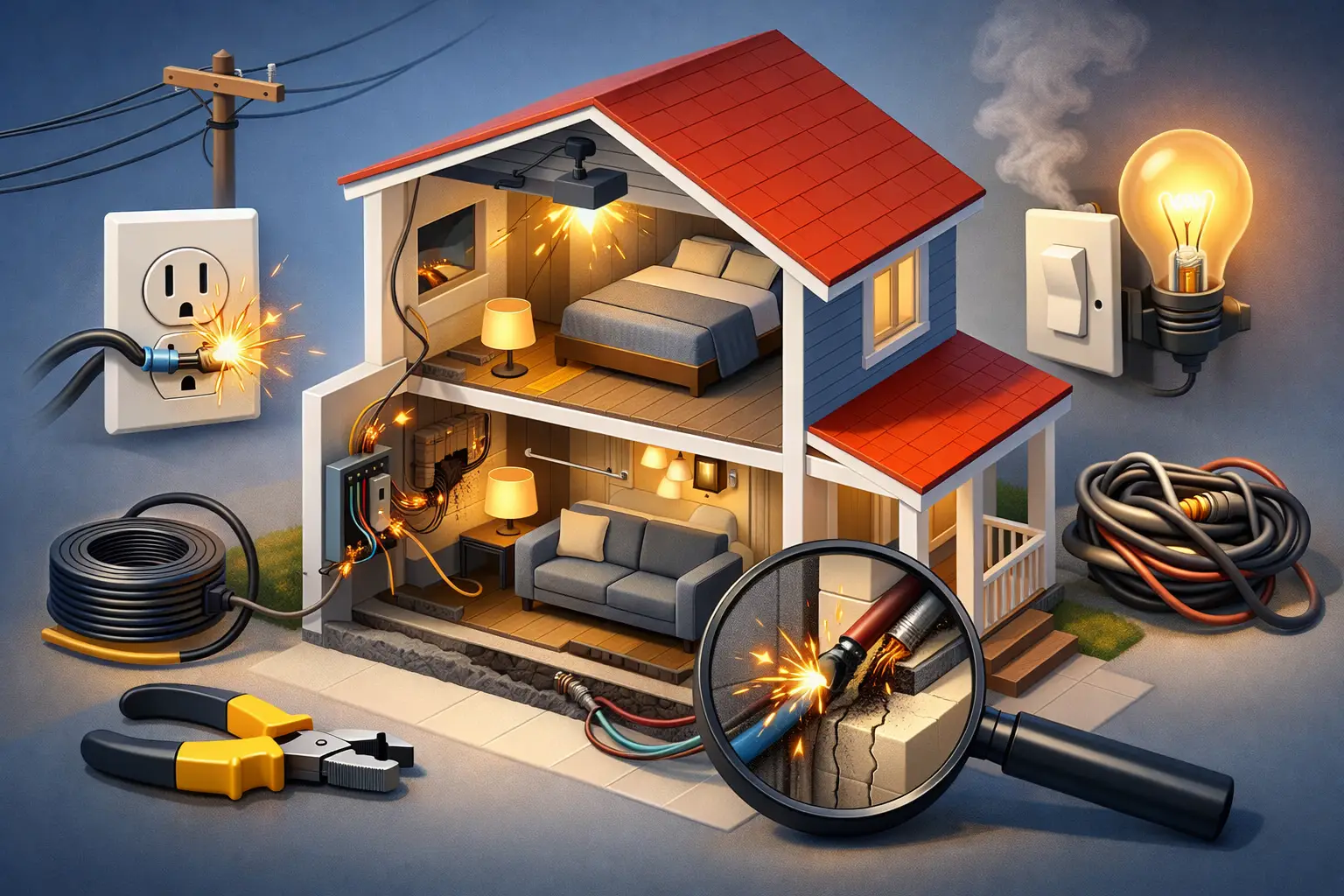
Some faults need immediate attention, while others point to a system that should be assessed before it becomes dangerous. Arrange an inspection promptly if you notice several of the following signs:
A single tripped circuit does not always mean a rewire is required. It may be caused by one faulty appliance, moisture in an outside fitting or a localised fault. Repeated tripping, heat, burning smells and visible damage are different. These can indicate a serious fault and should be investigated by a qualified electrician without delay.
If you smell burning, see smoke, receive an electric shock or notice sparking from a socket or consumer unit, switch off the power if it is safe to do so and seek urgent electrical assistance. Do not keep resetting a breaker to restore power without finding the cause.
The type of cable in a property can offer useful clues. Older homes may contain rubber-insulated, fabric-covered or lead-sheathed cables. These materials can become brittle or deteriorate with age, especially where they have been exposed to heat, damp, building work or rodent damage.
Some older installations also have dated earthing arrangements, inadequate circuit capacity or consumer units that lack the protective devices expected in modern homes. A consumer unit upgrade can improve protection, but it is not a substitute for replacing unsafe or deteriorated wiring behind the walls and under floors.
This is why an electrician should assess the complete installation rather than make a decision based only on the fuse box. A newer consumer unit connected to old, damaged cables does not solve the underlying problem.
A major refurbishment is one of the best times to consider rewiring. Chasing walls, lifting floors and accessing ceilings is much easier before plastering, decorating and fitting kitchens or bathrooms. Completing electrical work at this stage can avoid unnecessary disruption and repeat costs later.
A full rewire is commonly considered when a property is being extended, converted into flats, remodelled for an open-plan layout or upgraded with a new kitchen, electric shower, underfloor heating, air conditioning or electric vehicle charging. These additions can significantly increase electrical demand.
There is a trade-off. A full rewire is disruptive and requires planning, especially in an occupied home. In some cases, targeted remedial work and additional circuits are the better option. In others, patching an ageing system only postpones a larger safety and reliability issue. An inspection provides the evidence needed to make the right decision.
An Electrical Installation Condition Report, commonly called an EICR, examines the fixed electrical installation rather than portable appliances. The electrician tests circuits, checks protective devices, looks for signs of deterioration and identifies defects that need attention.
For landlords, regular electrical safety checks are a legal responsibility in rented homes in England. The report also gives homeowners a clear picture before buying a property, starting renovation work or making an insurance-related decision.
An unsatisfactory report does not automatically mean the entire property must be rewired. The observations may relate to a specific circuit, earthing issue, damaged accessories or an outdated consumer unit. Equally, a report can reveal widespread concerns that make a full rewire the safest and most cost-effective route.
A full rewire replaces the fixed wiring throughout a property. It normally includes new cables, back boxes, sockets, switches, lighting circuits and a modern consumer unit with appropriate protection. The scope can also include smoke and heat alarms, extractor fans, external lighting, data cabling and provision for future upgrades.
Before work begins, a competent electrician should survey the property and discuss how you use each room. A family home with a home office, a loft conversion and a high-spec kitchen needs a different circuit layout from a small rental flat. Planning socket positions, lighting controls and dedicated appliance circuits properly is essential because these decisions are far harder to change after decoration is complete.
Rewiring usually involves lifting some floorboards and making controlled channels in walls. Good contractors work carefully, but clients should expect dust, noise and follow-on making-good work. In an occupied property, electricians may be able to complete the project in stages, although this can take longer and requires temporary arrangements for power.
Once completed, the installation should be tested, certified and clearly labelled. Keep the electrical certificates with other property records. They are useful for future maintenance, selling the property, managing a tenancy and proving that work has been completed correctly.
For landlords, a reliable electrical installation protects tenants, reduces emergency call-outs and supports compliance duties. Older rental properties are particularly likely to have a history of piecemeal alterations, such as added sockets, replacement kitchens or converted rooms. These changes can leave circuits overloaded or inconsistently documented.
Property managers should not wait for a tenant to report a serious fault. Regular inspection, clear records and timely remedial work help prevent small defects from becoming costly disruptions. If an EICR identifies urgent issues, arrange repairs quickly and ensure the relevant documentation is retained.
Fresh paint, modern sockets and a recently fitted kitchen can make an electrical installation appear newer than it is. The most important parts of a system are often hidden: cables in walls, connections under floors and protective devices inside the consumer unit.
If you are concerned about an older property, recurrent faults or an upcoming renovation, an inspection gives you a factual starting point. EDL Electrical can assess the condition of your installation, explain the findings in plain language and carry out the necessary work with safety, compliance and long-term reliability in mind.
The right time to act is before a warning sign becomes an emergency. A properly assessed and professionally installed electrical system gives your property a safer foundation for everything you need it to do.
Generator failure recovery for London homes and businesses: immediate safety steps, fault checks and when to call a qualified electrician for urgent help.

Security lighting helps London homes and businesses deter intruders, protect access routes and improve visibility. Guidance on choosing and proper upkeep.

Need power cut fault diagnosis in London? Learn how to check your consumer unit safely, spot urgent risks and know when to call a...