November 15, 2026

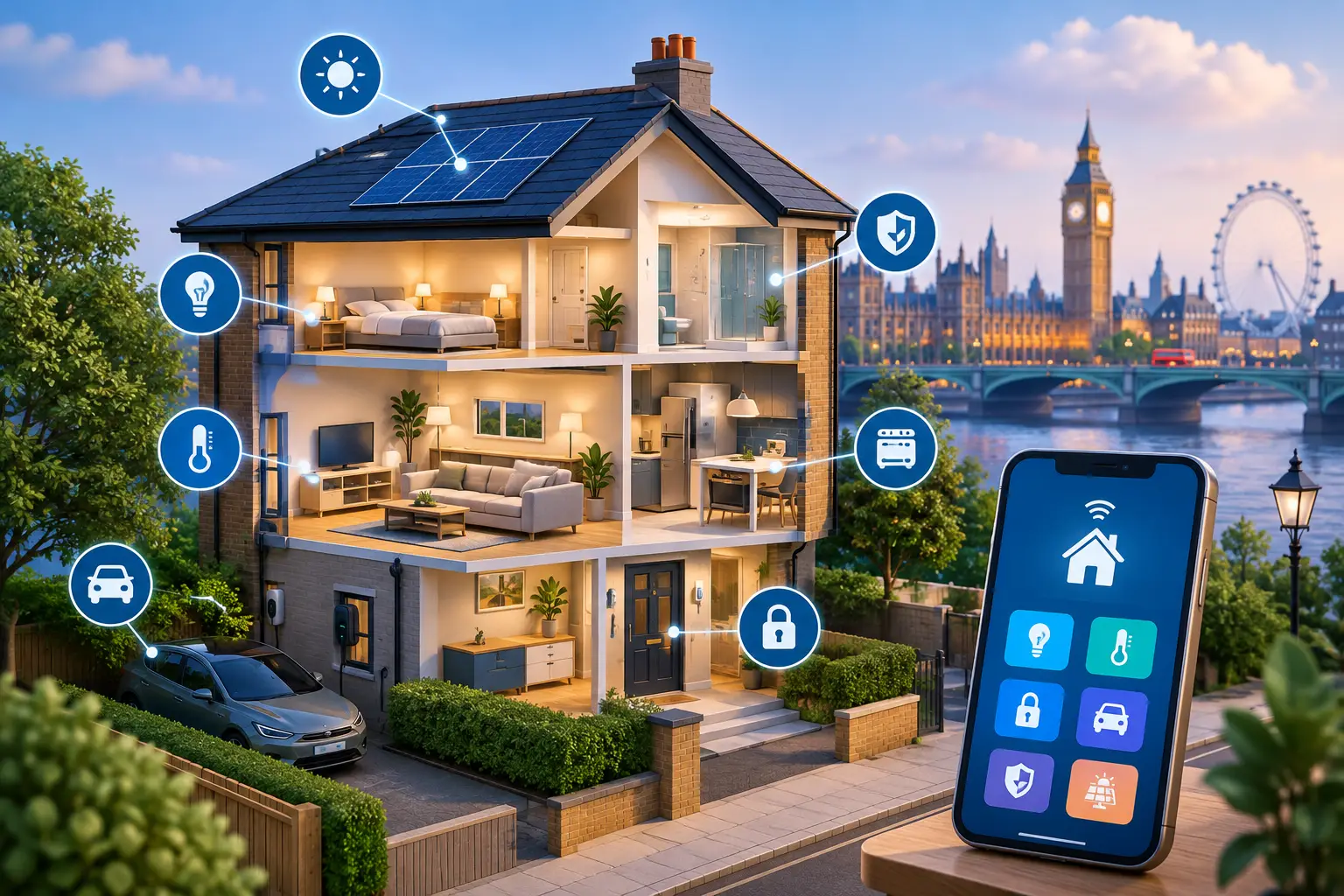
Explore the best smart home features for safer, more efficient London homes, with practical advice on installation, wiring and electrical safety checks.






A bathroom light can look perfectly fitted yet still be unsafe if it is installed in the wrong location or has the wrong water-protection rating. Understanding the best bathroom lighting safety zones helps homeowners, landlords and property managers make sound decisions before choosing fittings or starting refurbishment work. In the UK, bathroom electrical work must account for water, steam, condensation and the increased risk of electric shock.
The key point is simple: a fitting is not suitable merely because it is labelled as a bathroom light. Its position, IP rating, supply type and method of installation all matter. A qualified electrician can assess the room as a whole and install lighting that meets the requirements of BS 7671, commonly known as the IET Wiring Regulations.
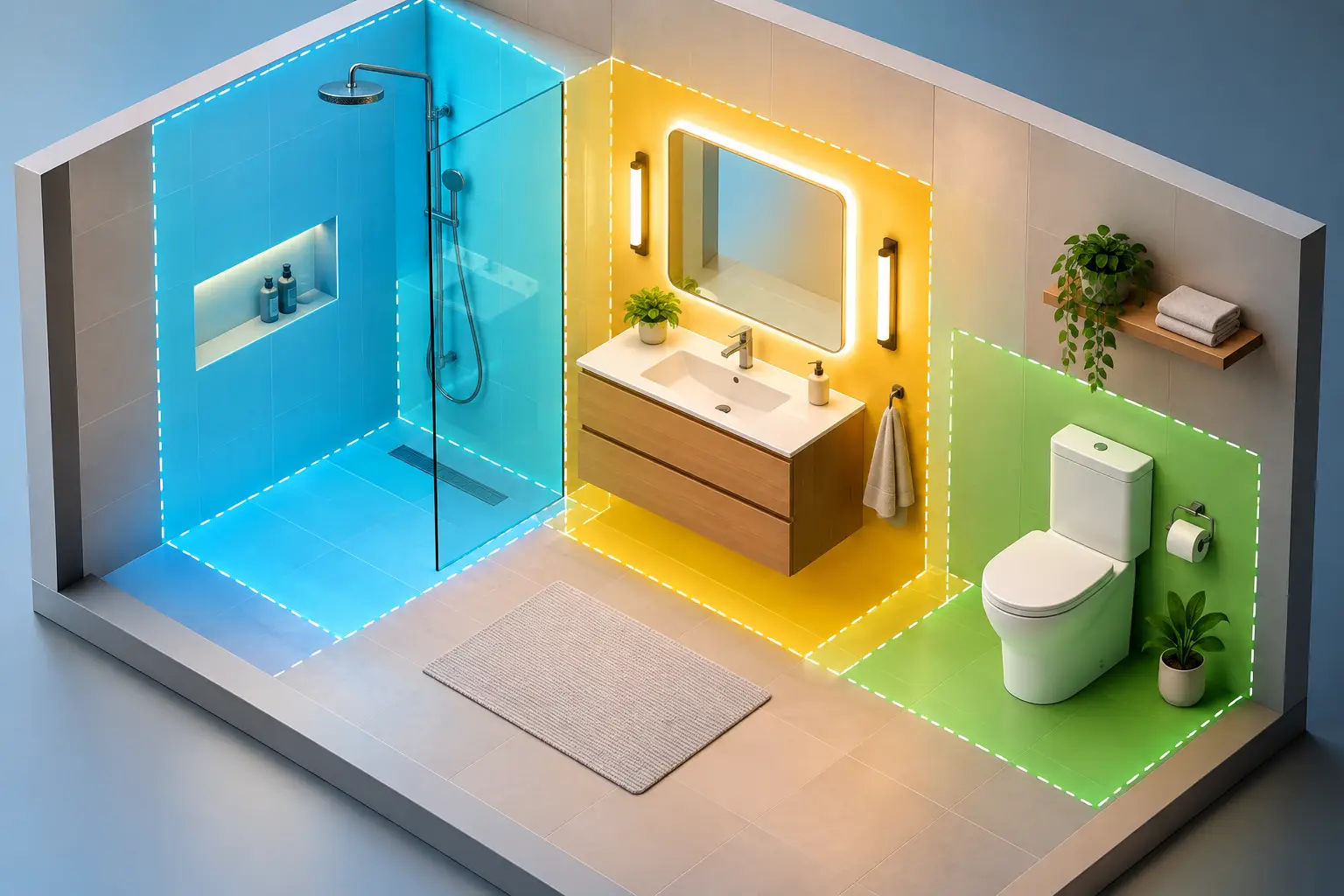
Bathrooms containing a bath or shower are divided into zones. These identify how likely electrical equipment is to come into contact with water and, therefore, what level of protection is required. The zones are measured from the bath, shower tray or fixed shower outlet, rather than from where water happens to splash on a particular day.
Zone 0 is the interior of the bath or shower basin itself. This is the area with the greatest exposure to water, so equipment choices are very limited.
Any light installed here must be specifically designed for this use, supplied at safety extra-low voltage (SELV) and protected to at least IPX7. An IPX7 rating means the product is protected against temporary immersion in water. The transformer or driver for the fitting must be located outside the zones unless it is specifically approved for the location.
In practice, lighting within Zone 0 is unusual in a standard home. It can be used for specialist designs, such as certain recessed fittings in a shower floor or bath feature, but it is not a place for a conventional downlight or decorative fitting.
Zone 1 covers the space immediately above a bath or shower tray, up to 2.25 metres from the finished floor level. Where there is a shower with no tray, it generally extends 1.2 metres horizontally from the fixed water outlet and up to the same height.
Fixed lighting may be installed in Zone 1 when the fitting is suitable for the environment and correctly installed. As a minimum, it should normally be rated IPX4, meaning it is protected against water splashing from any direction. If water jets may be used for cleaning, a higher IPX5 rating may be necessary.
Recessed LED downlights are a common choice in this area, but only if their stated IP rating and installation instructions make them appropriate for Zone 1. The fitting also needs enough space above the ceiling, suitable fire protection where required, and correct connection to the lighting circuit. Selecting a downlight purely for its appearance can create problems later.
Zone 2 is the 600mm area extending horizontally beyond Zone 1, also up to 2.25 metres above floor level. This may include the wall beside a bath, the ceiling edge around a shower or a nearby vanity position.
A minimum IPX4 rating is generally required for equipment in Zone 2. This is often where homeowners want wall lights, illuminated mirrors or feature lighting, so checking the manufacturer’s stated zone suitability is essential. A fitting with a high IP rating may be suitable, but it still needs to be installed in accordance with the wiring regulations and the manufacturer’s instructions.
A mirror light placed close to a basin might fall outside the formal zones, for example, but it is still exposed to splashes and steam. Choosing a bathroom-rated fitting remains the sensible approach.
The rest of the bathroom is described as outside the zones. Standard light fittings can potentially be installed here, but the room’s damp conditions must still be considered. Condensation can affect ordinary fittings, especially in poorly ventilated bathrooms or rooms where showers are used frequently.
A suitable ceiling light, good extraction and sensible positioning will usually provide a safer, longer-lasting result than fitting a decorative light intended only for dry rooms. Electrical circuits serving a bathroom also require appropriate protection, typically including 30mA RCD protection. This reduces the risk of serious harm if a fault develops, but it does not make unsuitable equipment safe to install near water.
The IP rating tells you how well an electrical enclosure resists the entry of solid objects and water. It is shown as two digits after the letters IP. For bathroom lighting, the second digit is usually the most relevant because it relates to water protection.
For example, IP44 is a familiar rating for bathroom fittings. The first 4 indicates protection against objects larger than 1mm, while the second 4 confirms protection against splashing water. IP65 provides stronger protection against water jets, while IP67 is designed to withstand temporary immersion.
Do not assume that the highest rating is always the best purchase. A higher-rated fitting may cost more, offer fewer style options or require particular installation conditions. The best choice is the fitting that is properly rated for its exact location, backed by clear manufacturer guidance and installed correctly.
Lighting works best when it is planned around how the bathroom will be used. A single central fitting may technically comply, but it can leave shadows around a mirror or make a compact bathroom feel flat. Layered lighting can improve visibility without compromising safety.
For many bathrooms, a practical arrangement includes ceiling lighting for general illumination, a properly rated mirror light for shaving or applying make-up, and low-level lighting outside the wettest areas for night-time use. Dimmer controls can be useful, provided they are compatible with the LED fittings and positioned appropriately. Conventional switches should not be installed within the zones. A pull-cord switch is commonly used within a bathroom, while a wall switch is generally positioned outside the room.
The ceiling height also matters. In a room with a low ceiling, the 2.25-metre zone boundary may mean that more of the ceiling falls within Zone 1 or Zone 2 than expected. In a loft conversion, an angled ceiling can further complicate fitting positions. This is one reason why a site assessment is preferable to relying solely on an online lighting plan.
The most frequent issue is fitting a standard indoor light in a splash-prone area because it looks similar to a bathroom-rated alternative. Another is assuming that an IP44 fitting can go anywhere in the room. Zone 0, for instance, requires a significantly higher level of water protection.
Other mistakes include placing transformers above ceilings where they cannot be accessed or may overheat, using incompatible dimmers with LED fittings, and drilling into concealed cables or pipework during a DIY installation. Bathrooms often have tiled walls, limited access and hidden services, which makes alterations less straightforward than they appear.
Landlords should also be cautious when refreshing a bathroom between tenancies. Replacing a light fitting is not simply a cosmetic task if the new product changes the electrical load, zone suitability or wiring arrangement. Keeping installation details and test records supports a safer property and helps demonstrate that maintenance has been handled responsibly.
Any new circuit, alteration to bathroom wiring, replacement of unsuitable lighting or investigation of a faulty fitting should be handled by a competent electrician. Warning signs include lights flickering when the extractor runs, a warm switch or fitting, repeated RCD tripping, visible corrosion, water marks near ceiling lights or an electric shock or tingling sensation from any appliance. If there is a suspected electrical fault, stop using the affected circuit and arrange urgent professional help.
A qualified electrician will check the zones, circuit protection, earthing arrangements, cable routes and condition of existing wiring before recommending a solution. For London homeowners and landlords, EDL Electrical can assess bathroom lighting installations and carry out compliant upgrades with safety and reliable workmanship at the centre of the job.
The right bathroom light should make the room easier to use, not introduce a hidden risk. Start with the zone, choose a fitting designed for that exact position, and have the installation checked or completed by a qualified professional.
Explore the best smart home features for safer, more efficient London homes, with practical advice on installation, wiring and electrical safety checks.
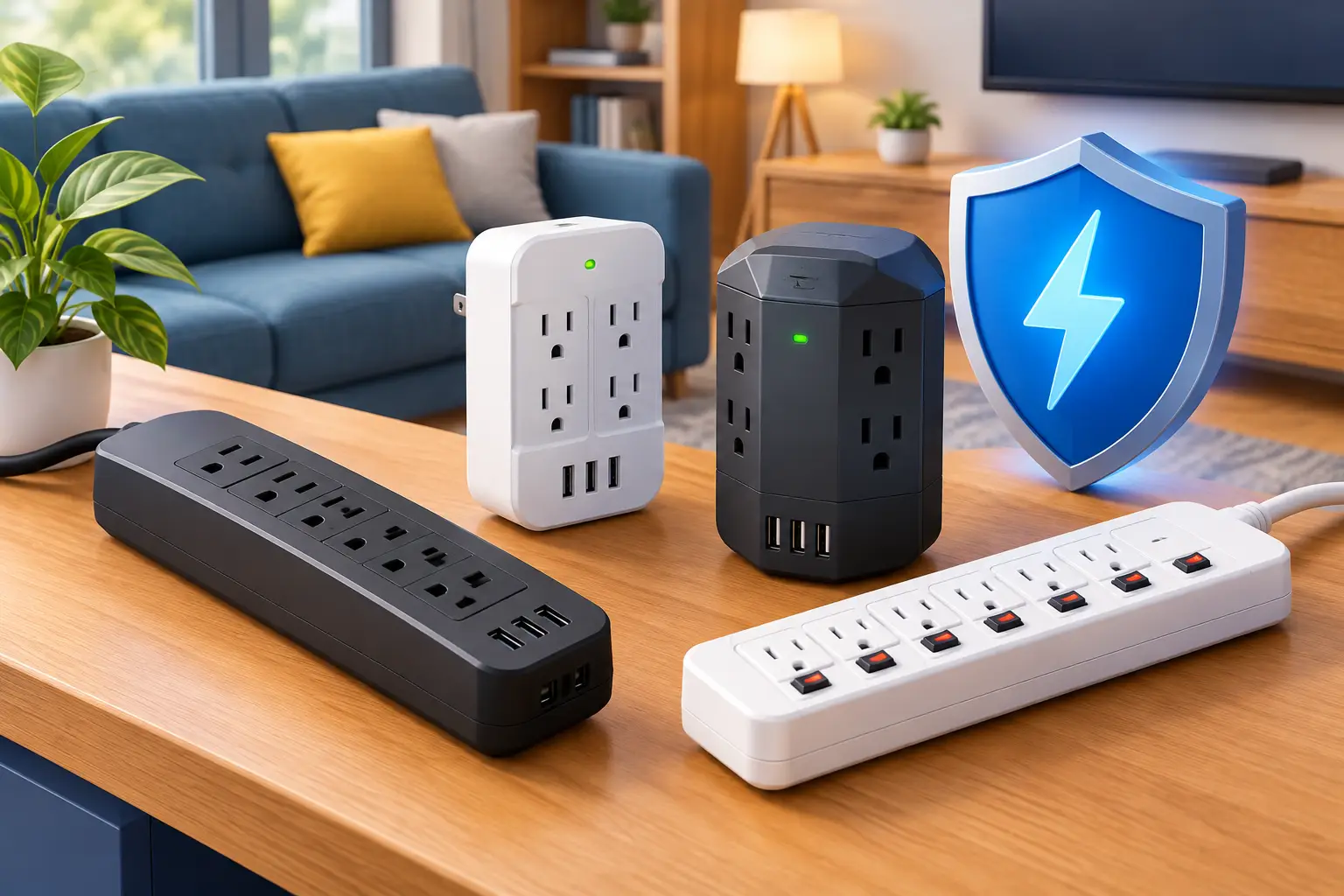
Compare the best home surge protectors for UK properties, from consumer-unit SPDs to plug-in units, and choose the right level of protection at home.
Why does my RCD trip? Learn the common causes, what to do safely, and when a qualified electrician should test your home or business...