
October 14, 2026

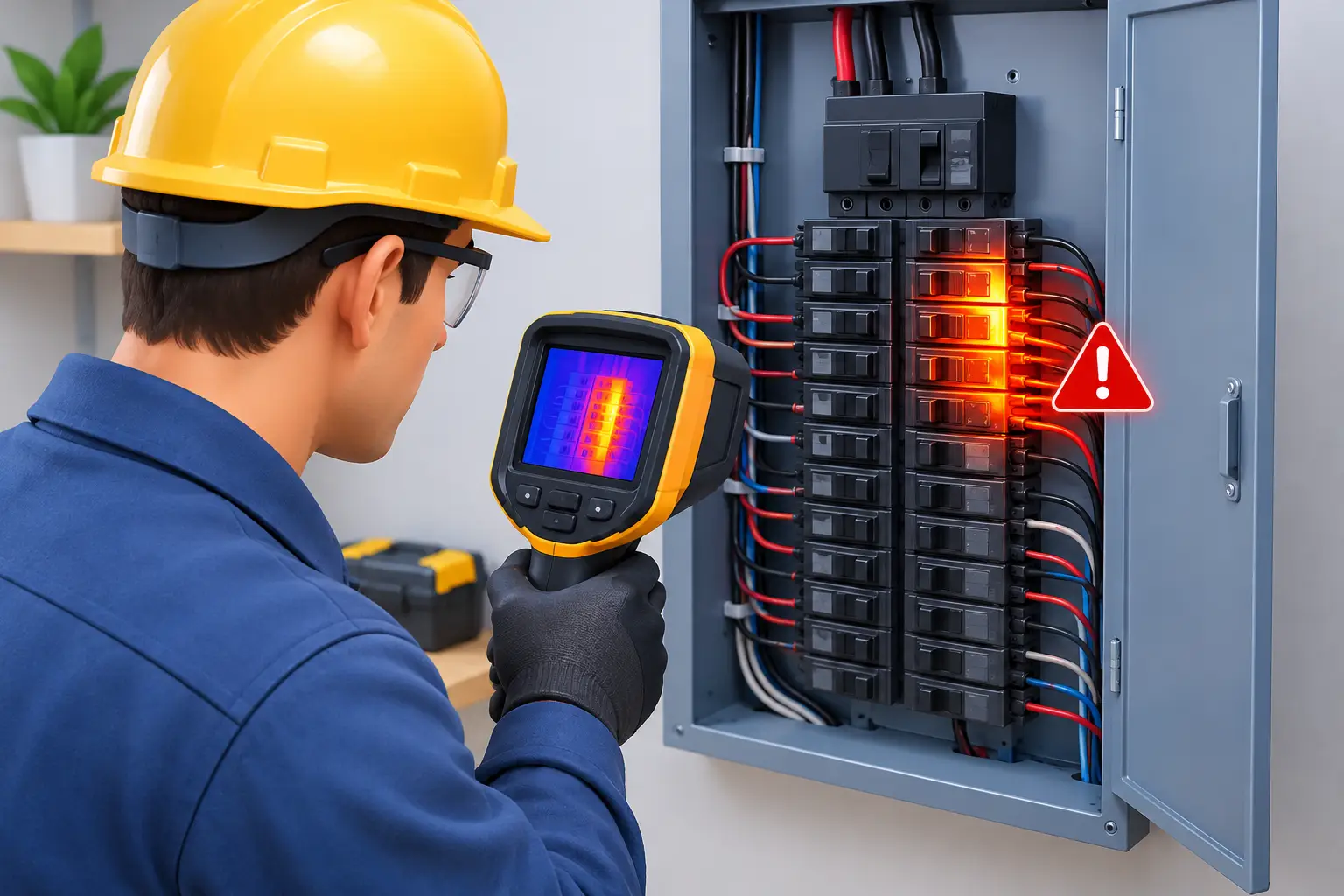
Learn how to identify overloaded circuits in your home or business, recognise warning signs and know when to call a certified London electrician for...







A loose plug, split extension lead or damaged kettle can create a genuine risk long before an electrical installation report is due. That is where PAT testing requirements matter. For London landlords, homeowners and businesses, portable appliance testing is a practical way to identify unsafe electrical equipment, demonstrate sensible maintenance and protect the people using a property.
The key point is that PAT testing is not a one-size-fits-all annual exercise. The correct approach depends on the appliance, where it is used, who uses it and how likely it is to suffer damage. A well-managed testing programme focuses attention where the risk is highest rather than applying the same date to every item.
PAT stands for Portable Appliance Testing, although the work normally includes more than an electrical test. A competent person will first visually inspect the appliance, its plug and its cable, then carry out appropriate electrical checks where needed. The purpose is to establish whether equipment can continue to be used safely.
There is no single UK law stating that every portable appliance must receive a PAT test every year. However, employers, landlords and those responsible for commercial premises have broader duties to keep electrical equipment safe. In workplaces, this includes responsibilities under the Electricity at Work Regulations 1989 and the Health and Safety at Work etc. Act 1974. These duties require electrical systems to be maintained so far as reasonably practicable to prevent danger.
For landlords, the legal requirement to arrange regular Electrical Installation Condition Reports in privately rented homes concerns the fixed electrical installation: wiring, consumer units, sockets and fixed accessories. It is different from PAT testing. However, if a landlord supplies portable electrical appliances with a furnished tenancy, such as a microwave, fridge, lamps or vacuum cleaner, they remain responsible for ensuring those items are safe.
PAT testing is often the clearest way to support that responsibility, particularly where appliances are provided for tenants, staff, customers or contractors to use. It also gives property managers a traceable record of what has been checked and any remedial action taken.
The right testing frequency is determined by a risk assessment, not by a sticker date alone. Equipment used in a clean, low-traffic office by trained staff may need far less frequent testing than equipment used daily in a workshop, commercial kitchen, building site or communal area.
Consider the appliance’s environment and treatment. A desktop monitor left in one place is unlikely to face the same wear as a cleaner’s vacuum, a hired power tool or a lead used outdoors. Extension leads, multi-way adaptors and portable heaters deserve close attention because they are frequently moved, overloaded, trapped under furniture or exposed to damage.
The type of user matters too. Equipment used by the public, tenants, children or multiple members of staff can be harder to monitor. In a managed building, visual checks between formal inspections may be more valuable than a testing schedule that is too widely spaced.
A sensible assessment should account for:
This is why a blanket annual PAT test can be unnecessary for some appliances and insufficient for others. The goal is reliable electrical safety, not simply collecting pass labels.
A thorough visual inspection is the starting point. Many faults can be found without connecting a tester: cracked plugs, exposed inner insulation, loose cable grips, damaged casings, burn marks, bent pins and unsuitable adaptors are all warning signs. An appliance with visible damage should be removed from use straight away.
Where testing is appropriate, the tester may check earth continuity on Class I equipment, insulation resistance and polarity. Other tests can be selected according to the appliance design. Class II appliances, identified by the double-insulated square symbol, do not rely on an earth connection but still require inspection and suitable electrical checks. Leads and extension reels should be tested as separate items.
Not every item with a plug can be treated identically. Some IT equipment, surge-protected extension leads, specialist machinery and sensitive electronic devices need the right test method to avoid damage or misleading results. A competent tester understands these limits and records the outcome properly.
There is no universal timetable, and official guidance does not require annual testing of every appliance. Frequency should reflect the risk assessment and be reviewed when circumstances change, such as a refurbishment, change of tenant, new equipment, an incident or repeated damage.
As a general principle, equipment in a low-risk office may only need routine user checks and periodic formal inspection, with testing at a longer interval. Appliances in rented accommodation should be checked before a new tenancy and at sensible intervals during management visits, especially if they are heavily used or portable. Higher-risk equipment in construction, industrial settings, kitchens or public-facing spaces may require much more frequent inspection and testing.
A practical programme often combines three levels of control. Users carry out simple pre-use checks, responsible staff complete regular visual inspections, and a competent person performs formal inspection and testing at an interval justified by the risk. This approach catches obvious damage quickly instead of waiting for the next booked test.
Homeowners are not generally under the same workplace duties when using their own appliances in their own home. Even so, checking older appliances, replacing damaged leads and avoiding overloaded adaptors are sensible safety measures. A qualified electrician should investigate recurring tripping, overheating sockets or signs of electrical damage rather than relying on PAT testing to diagnose a fault in the fixed wiring.
Landlords should keep supplied appliances in safe working order and be able to show what checks have been undertaken. PAT testing can be particularly useful in furnished lets, HMOs, holiday lets and communal areas where equipment is supplied for shared use. It complements, but never replaces, the required EICR for the property’s fixed installation.
For employers and commercial operators, the duty is more formal. They should identify appliances owned by the business, equipment brought in by staff where relevant, and items used by contractors or visitors. Clear reporting procedures are essential. Staff should know not to use equipment with damaged cables, loose plugs or overheating signs, and managers should arrange repair or replacement promptly.
A pass label is useful for identifying an appliance, but it is not the full record. Good documentation should show the asset description or identification number, location, inspection date, test result, defects found, action taken and proposed next inspection date. These records make it easier to manage larger portfolios, demonstrate a proportionate safety system and spot recurring problems with particular equipment.
If an item fails, it should be clearly labelled, isolated from use and repaired only by someone competent to do so. Once repaired, it should be inspected and tested again before it is returned to service. Repeatedly replacing fuses or taping a damaged cable is not an acceptable repair.
PAT testing checks portable appliances. It does not confirm that a property’s wiring, socket circuits, earthing or consumer unit are in satisfactory condition. If sockets are hot, breakers trip regularly, lights flicker, there is a burning smell or an appliance repeatedly fails testing, the cause may lie in the fixed installation.
In those cases, arrange a professional electrical inspection rather than continuing to reset the circuit or replace appliances. EDL Electrical can assess the fault, carry out appliance testing where appropriate and advise whether further investigation, repairs or an EICR are needed.
Treat PAT testing as part of everyday property care: check equipment before it becomes a hazard, keep meaningful records and act quickly when something does not look or perform as it should.
Learn how to identify overloaded circuits in your home or business, recognise warning signs and know when to call a certified London electrician for...

Plan a safe, efficient LED lighting installation for your London home or business, from circuit checks and fitting choice to compliant final testing.

Can landlords use expired EICRs? Understand your legal duties, tenant safety risks and the practical steps to put an overdue electrical report right today.