
October 16, 2026

Understand PAT testing requirements for London homes, landlords and businesses, including legal duties, risk-based testing intervals and clear records.







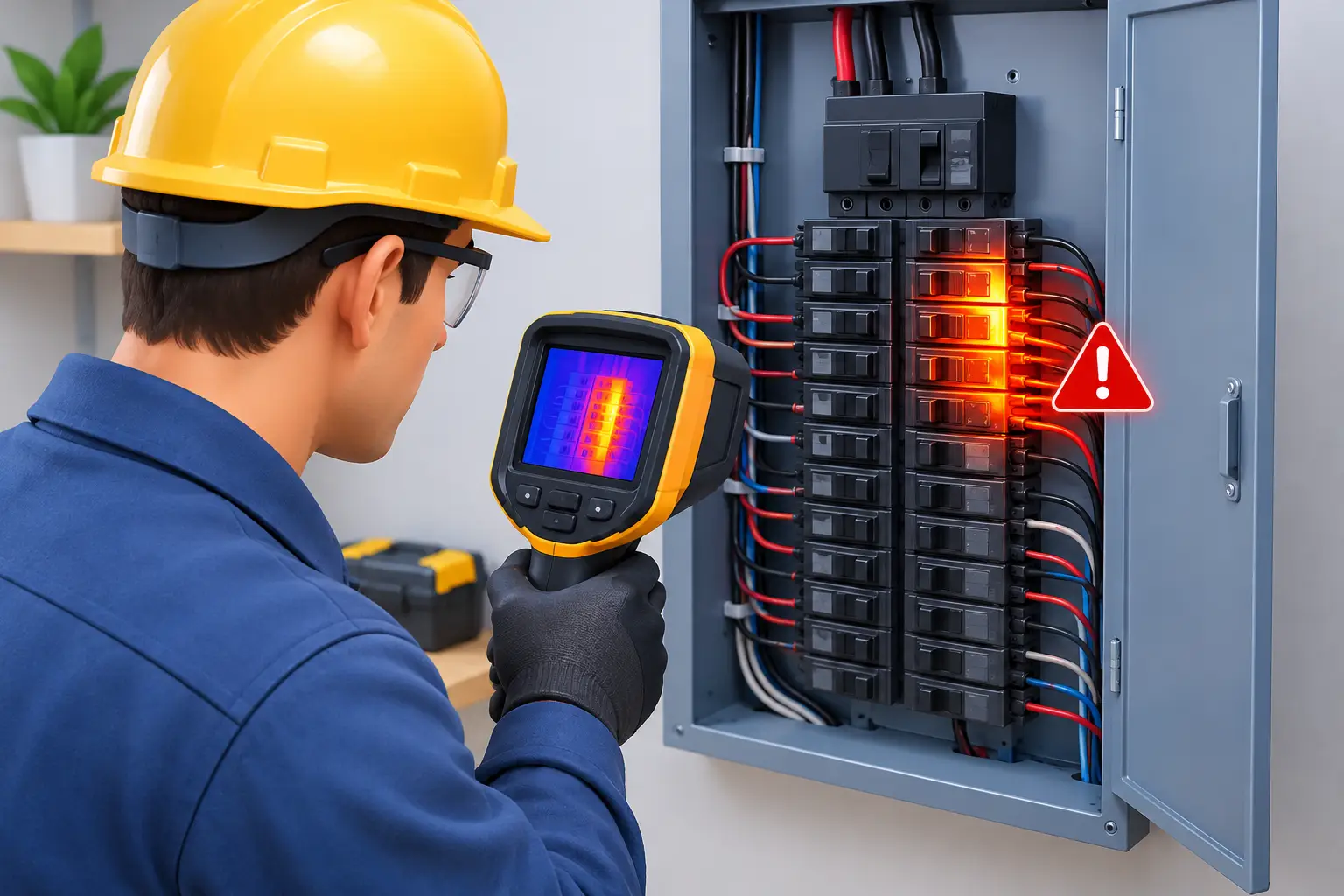
A circuit that keeps tripping during the morning rush, when the kettle, toaster and microwave are all in use, is not simply an inconvenience. It may be your property’s way of warning you that demand has exceeded what the circuit can safely supply. Knowing how to identify overloaded circuits helps homeowners, landlords and business operators act before repeated tripping becomes damaged wiring, overheating or a more serious electrical risk.
An overloaded circuit is usually manageable when it is addressed early. The key is to recognise the pattern, reduce demand safely and arrange a proper assessment where the issue keeps returning. Do not remove consumer unit covers, replace protective devices with higher-rated ones or repeatedly reset a breaker in the hope that it will hold.
Every circuit in a UK property is designed to carry a limited amount of electrical current. Your consumer unit contains protective devices, commonly miniature circuit breakers (MCBs) or RCBOs, that disconnect the supply when they detect a problem. Their job is to protect the fixed wiring from carrying more current than it was designed for.
An overload occurs when too many appliances, or appliances with a high combined demand, are operating from the same circuit. This is particularly common in kitchens, utility rooms, home offices and commercial spaces where equipment has gradually been added without changes to the electrical installation.
It is useful to distinguish an overload from other faults. An overloaded circuit often trips when several appliances are running together and may remain on once demand is reduced. A short circuit, damaged cable or faulty appliance can cause an immediate trip, sometimes as soon as a particular item is switched on. An RCD or RCBO may also trip because of earth leakage, which is a different issue requiring investigation. The symptoms can overlap, so persistent tripping should always be checked by a qualified electrician.
The most obvious sign is a breaker that trips when several appliances are used at once. For example, a kitchen circuit may fail when a kettle is switched on while the dishwasher is heating water and an air fryer is running. In an office, the trigger may be portable heaters, printers, monitors and phone chargers sharing a limited number of sockets.
Repeated tripping is not the only warning. Look out for lights dimming or flickering when a heavy-load appliance starts, sockets or plugs that feel unusually warm, a faint burning smell, buzzing from an accessory or discolouration around a socket faceplate. These are not normal signs of a busy circuit. Stop using the affected socket or appliance and seek professional advice promptly.
Other patterns can be less obvious. Extension leads that are permanently in use, multi-way adaptors with several high-wattage items connected, and sockets that are always in demand all suggest the original circuit layout no longer suits how the space is used. In rental properties, changes in occupancy or the addition of appliances can create this problem without the landlord being aware of it.
A tripping device is doing valuable protective work. Never tape it in the on position, bypass it or fit a larger breaker to prevent trips. Increasing the rating without confirming the cable size, installation method and circuit design can leave the wiring unprotected.
You can make a few safe observations before arranging an electrician. First, note which breaker or RCBO has tripped and what label is beside it. Labels such as ‘upstairs sockets’, ‘kitchen ring’ or ‘lighting’ can help identify the area, although older consumer units are not always labelled accurately.
Next, switch off and unplug the appliances that were in use on that circuit. Reset the device once only, then restore appliances gradually. If the circuit stays on until a particular appliance is connected or switched on, that item may be faulty rather than the circuit overloaded. Do not continue testing an appliance that causes immediate tripping, sparks, heat or a burning smell.
If the circuit only trips when several appliances operate together, overload is more likely. Record what was running at the time, including equipment that cycles automatically such as fridges, freezers, washing machines and heaters. This gives an electrician a useful starting point and can reveal a demand pattern that is easy to miss.
Avoid relying on plug-in power strips as a permanent solution. A power strip does not create extra capacity. It only allows more equipment to draw power from the same socket and, ultimately, the same circuit.
Appliances that produce heat generally place the greatest demand on a circuit. Kettles, toasters, microwaves, air fryers, tumble dryers, washing machines, dishwashers, electric heaters, hair dryers and irons can all draw substantial power. Even a single kettle can use around 2,000 to 3,000 watts while heating.
In practical terms, two or three high-demand appliances used at the same time can be enough to overload a shared circuit, depending on its design and what else is connected. This is why a kitchen that worked well a few years ago can begin tripping after new countertop appliances, a coffee machine or an electric heater are introduced.
Portable heaters deserve particular caution in offices, shops and older homes. They are often plugged into extension leads or used on socket circuits already serving IT equipment and lighting. If regular heating is needed in a particular room, a properly designed fixed solution is usually safer and more reliable than relying on portable appliances.
If there is no smell of burning, visible damage, smoke or sparking, reduce the load by switching off and unplugging non-essential appliances. Reset the protective device once. If it remains on, use appliances more selectively until the circuit can be assessed, especially where the problem has happened more than once.
If the breaker trips again, leave it off and arrange an inspection. Repeated resets can mask a developing fault and may increase the risk of damage. Do not use a socket that is hot, damaged, loose or discoloured, and do not continue using an extension lead that shows signs of heat or wear.
Treat smoke, sparking, a burning smell or crackling as urgent. If it is safe to do so, switch off power at the consumer unit and move people away from the affected area. Call the emergency services on 999 if there is a fire or immediate danger. If there is damage to the incoming electricity supply or an external cable, contact the electricity network operator on 105 rather than attempting any repair yourself.
Using appliances at different times can be a sensible short-term measure, but it is not always the right long-term answer. A household with a growing family, a converted loft or a new home office may simply need additional sockets or a new dedicated circuit. Likewise, commercial premises may need their electrical distribution reviewed after adding workstations, refrigeration, catering equipment or specialist machinery.
An electrician will assess the condition and capacity of the existing installation, the protective devices, circuit layout, connected loads and any signs of overheating. The solution may be as straightforward as replacing a faulty accessory or appliance. In other cases, it could involve adding a dedicated circuit, upgrading the consumer unit, improving socket provision or rewiring an older section of the property.
For landlords, recurring trips should be treated as a maintenance and safety issue, not merely a tenant-use problem. Tenants need enough safe socket capacity for ordinary living, and the installation must remain suitable for its intended use. An up-to-date Electrical Installation Condition Report can identify defects, deterioration and areas where the system no longer meets the demands placed upon it.
The best prevention is matching your electrical installation to how you genuinely use the property. Keep high-demand appliances on suitable wall sockets, avoid daisy-chaining extension leads and replace damaged plugs, leads and accessories promptly. In kitchens and utility rooms, spread portable appliances across appropriate circuits where possible, rather than running everything from one busy worktop area.
For businesses, include electrical demand in any office move, refit or equipment purchase. A small change, such as adding several desk heaters during winter, can have a large effect when multiplied across a floor. Planned electrical work is usually less disruptive and more cost-effective than an emergency response after a circuit fails.
EDL Electrical can investigate repeated tripping, overheating sockets and suspected circuit overloads across London, providing clear recommendations and compliant repair or upgrade work. A circuit should support your day-to-day needs quietly in the background. If it is repeatedly demanding your attention, it is time to have the cause checked properly.
Understand PAT testing requirements for London homes, landlords and businesses, including legal duties, risk-based testing intervals and clear records.

Plan a safe, efficient LED lighting installation for your London home or business, from circuit checks and fitting choice to compliant final testing.

Can landlords use expired EICRs? Understand your legal duties, tenant safety risks and the practical steps to put an overdue electrical report right today.