
September 20, 2026

Security lighting helps London homes and businesses deter intruders, protect access routes and improve visibility. Guidance on choosing and proper upkeep.








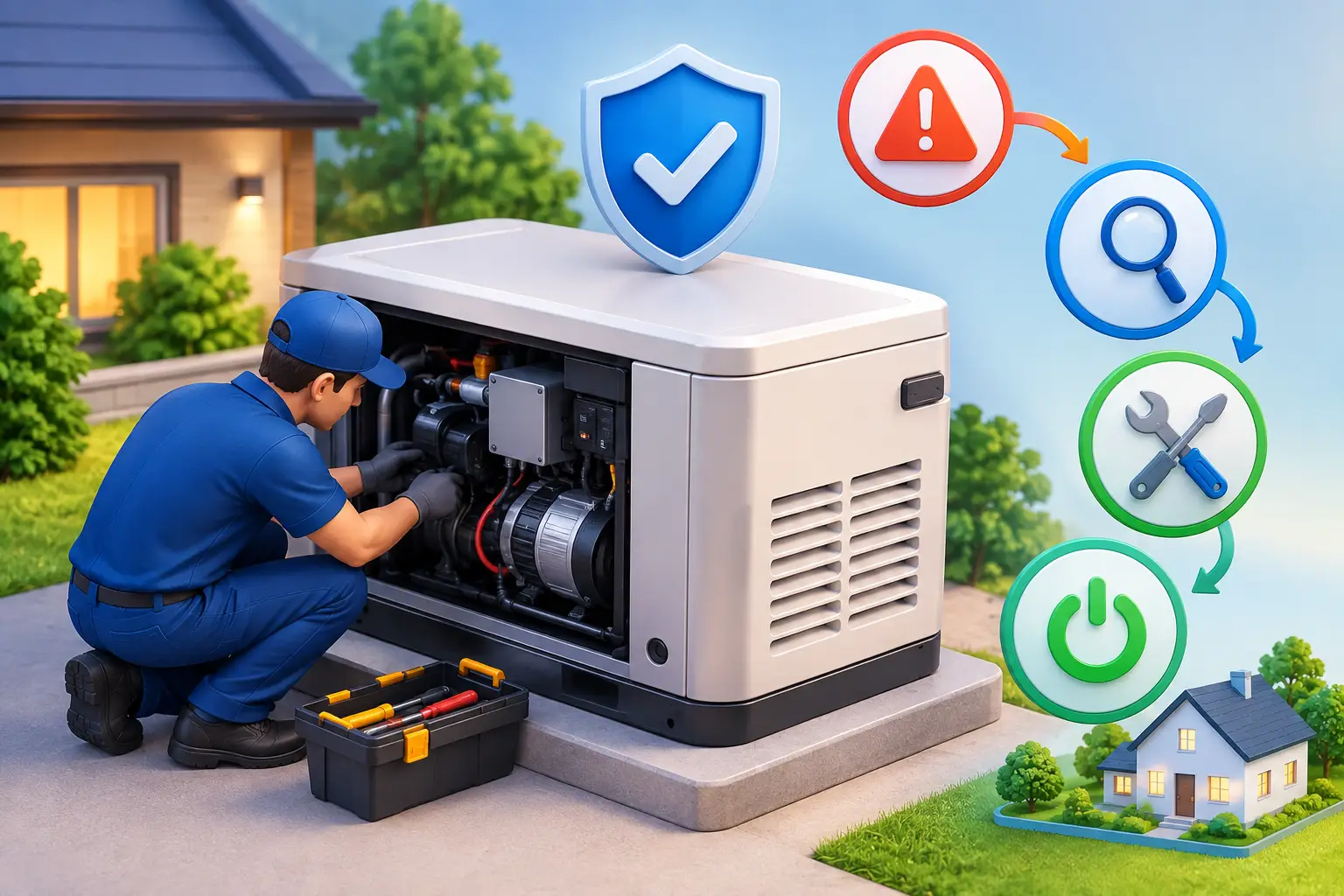
A standby generator should take pressure off when the mains supply fails. When it will not start, stalls under load or produces unstable power, generator failure recovery needs a calm, safety-first response. For London homes, managed properties and commercial premises, the priority is protecting people, preventing damage to electrical equipment and restoring a safe supply without creating a second fault.
A generator problem is not always a generator problem. The issue may sit with the fuel supply, battery, control panel, automatic transfer switch (ATS), earthing arrangement or the circuits connected to the backup system. Knowing what to check safely – and when to stop – can reduce downtime while keeping the property compliant and protected.
If there is a smell of fuel, visible smoke, sparks, overheating, water around electrical equipment or a burning smell, do not attempt a restart. Isolate the generator only if it is safe to do so, keep people away from the area and arrange urgent professional assistance. Never use a portable generator indoors, in a garage, basement, plant room or near open windows and vents. Carbon monoxide is colourless and odourless, and poor positioning can quickly become life-threatening.
Avoid touching damaged cables, exposed terminals or a wet generator. Water and electricity are a dangerous combination, particularly following a flood, storm damage or a leak in an external enclosure. If the generator serves a business, notify staff that backup power is unavailable and follow the site’s existing emergency procedures for lighting, fire systems, security and critical equipment.
Do not bypass an ATS, remove interlocks or use improvised leads to feed power back into a consumer unit. Backfeeding can energise cables unexpectedly, damage the installation and place utility workers at risk. A generator must be connected through correctly specified switching equipment installed by a competent electrician.
Once the immediate area is safe, basic observations can help identify the likely cause. Start by checking the control panel for warning lights, error codes or low-level alarms. Record the message before resetting anything. This information helps an electrician or generator engineer diagnose the fault efficiently, especially if the unit has shut down automatically.
For a portable generator, check whether there is sufficient fresh fuel and whether the fuel valve is open. Old petrol or contaminated diesel can cause poor starting, unstable running and blocked fuel components. For fixed standby generators, inspect the fuel level and any visible signs of leakage, but do not dismantle fuel lines or filters unless you are trained and authorised to do so.
The starting battery is another common cause. A slow crank, clicking sound or no response from the starter may point to a flat battery, loose connection or failed charger. Check only for obvious corrosion or loose external connections with the generator fully isolated. Do not short battery terminals, and remember that even a small starting battery can deliver enough current to cause burns or create sparks.
Also check whether the emergency stop button has been activated and whether the generator is set to the correct operating mode. Many standby systems require ‘Auto’ mode to respond to a mains failure. If a recent test or maintenance visit left the unit in ‘Manual’ or ‘Off’, it may not start when required.
A generator that runs but does not power the building can be frustrating, but it should not be treated as a simple inconvenience. The fault may lie in the ATS, a tripped protective device, damaged output cabling, incorrect settings or a problem with voltage and frequency regulation.
First, reduce the load if the system allows it. High-demand equipment such as electric heating, commercial refrigeration, catering equipment, lifts and machinery can overload a generator at start-up. Essential circuits should be prioritised through a properly designed backup-power arrangement. Attempting to run every circuit on a generator sized only for critical loads can cause repeated trips, unstable output and premature equipment wear.
Check the consumer unit or distribution board only if it is safe, dry and free from signs of damage. A tripped circuit breaker may indicate an overload or a fault on the connected circuit. Resetting it once can be reasonable where there are no warning signs. If it trips again, leave it off. Repeated resetting can worsen a fault and may conceal an issue that requires testing.
Where an ATS is involved, do not force the switch manually unless this is part of an approved procedure and carried out by a qualified professional. The ATS prevents the generator and mains supply from being connected at the same time. Its correct operation is fundamental to safety.
Generators do not always deliver the same clean, stable supply as the mains. Voltage fluctuations, incorrect frequency or poor earthing can affect servers, alarm panels, smart-home controls, medical equipment, tills and modern appliances. If output appears unstable – for example, lights flicker, motors sound unusual or electronics repeatedly reboot – disconnect sensitive non-essential equipment and arrange an inspection.
Surge protection can help reduce the risk of transient overvoltage damage, but it is not a substitute for correct generator installation and maintenance. Properties with IT equipment, security systems or building-management controls may benefit from a review of their backup power design, including surge protection, circuit separation and suitable uninterruptible power supplies for equipment that cannot tolerate even a brief interruption.
For commercial operators, keep a written record of the event. Note the time mains power failed, whether the generator started, any alarm codes, the loads connected and the time normal supply returned. These details make fault finding faster and provide a useful maintenance history.
Professional support is needed where the generator will not start after basic safe checks, keeps shutting down, trips protective devices, leaks fuel, produces smoke or appears to have unstable output. It is also essential if the fault involves the ATS, consumer unit, distribution board, earthing, fixed wiring or any hard-wired generator connection.
Landlords and property managers should take particular care. Emergency lighting, fire alarms, communal systems and security equipment may have legal, insurance and safety implications. A temporary workaround that leaves shared areas poorly lit or safety systems unsupported is rarely acceptable. The property needs a controlled response that identifies what is live, what is isolated and what remains safe for occupants.
For critical premises, a qualified electrician can assess the installation alongside a generator specialist where necessary. The right repair may involve electrical testing, ATS diagnosis, replacement protection devices, battery-charger repairs, load assessment or alterations to the backup circuits. It depends on the system design and the type of failure, which is why accurate diagnosis matters more than a quick reset.
Most generator failures reveal a maintenance gap rather than a sudden mystery. Generators need regular exercising under an appropriate load, battery checks, fuel monitoring and inspection of cables, exhaust arrangements, enclosures and changeover equipment. A generator that starts during a no-load monthly test may still struggle when the building asks it to carry essential circuits.
Fixed systems should be included in a planned electrical maintenance programme. This is particularly worthwhile for offices, shops, rental blocks and properties with home offices, electric gates, sump pumps or security systems that depend on power continuity. Maintenance should also confirm that circuit labels remain accurate and that the generator’s capacity still matches the property’s needs after alterations or new equipment has been added.
EDL Electrical can help London property owners investigate generator-related electrical faults, assess transfer arrangements and ensure fixed installations are safe and properly maintained. If there is any doubt about the condition of the supply or connected wiring, treat the generator as unavailable until it has been checked.
The best response to a generator failure is not to force power back on. It is to protect the people and equipment relying on it, record what happened and have the system returned to service by someone who can verify that it is genuinely safe to use.
Security lighting helps London homes and businesses deter intruders, protect access routes and improve visibility. Guidance on choosing and proper upkeep.
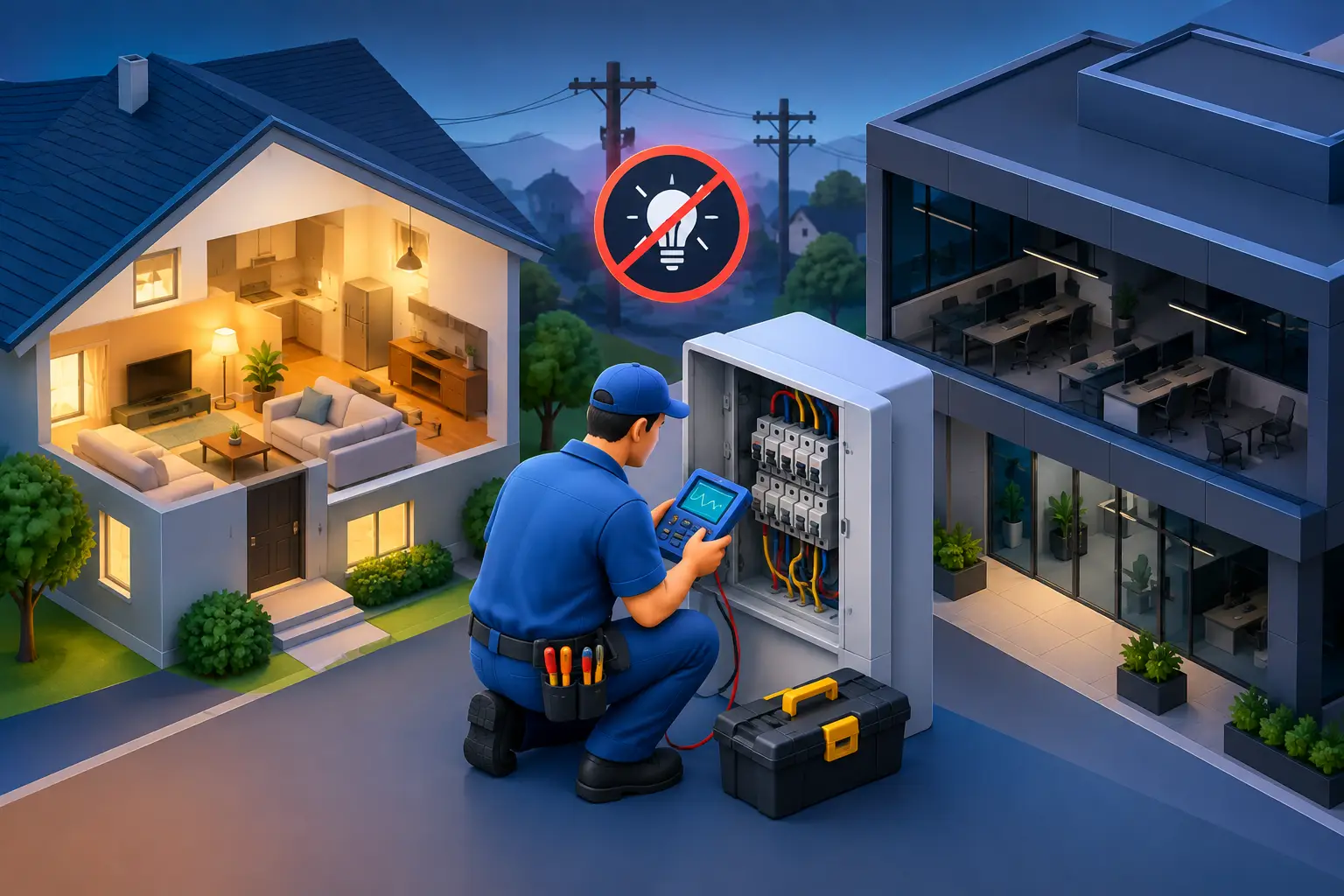
Need power cut fault diagnosis in London? Learn how to check your consumer unit safely, spot urgent risks and know when to call a...
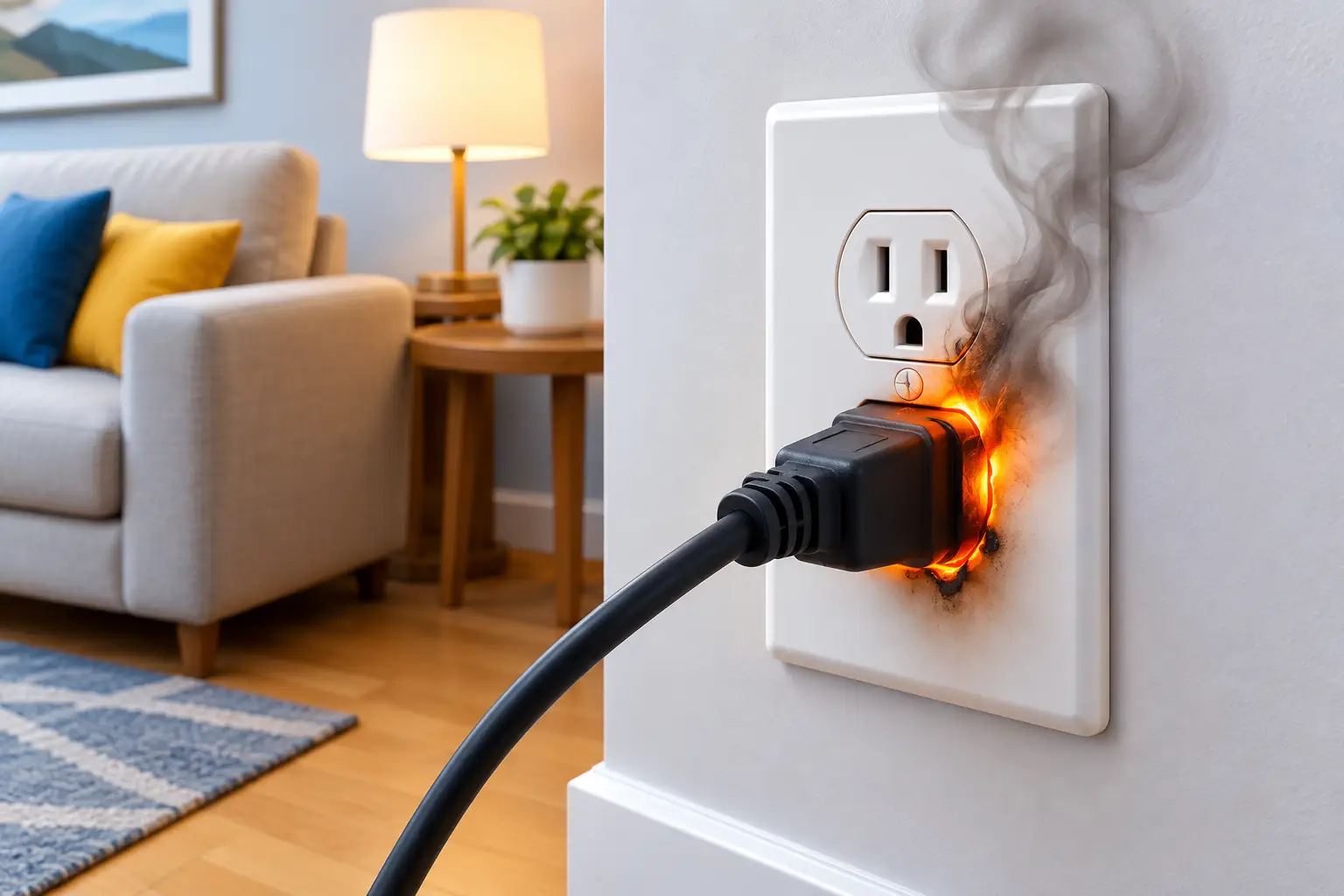
What causes burning sockets? Learn the warning signs, likely faults and safe next steps to protect your London home or business from electrical fire...