
September 22, 2026

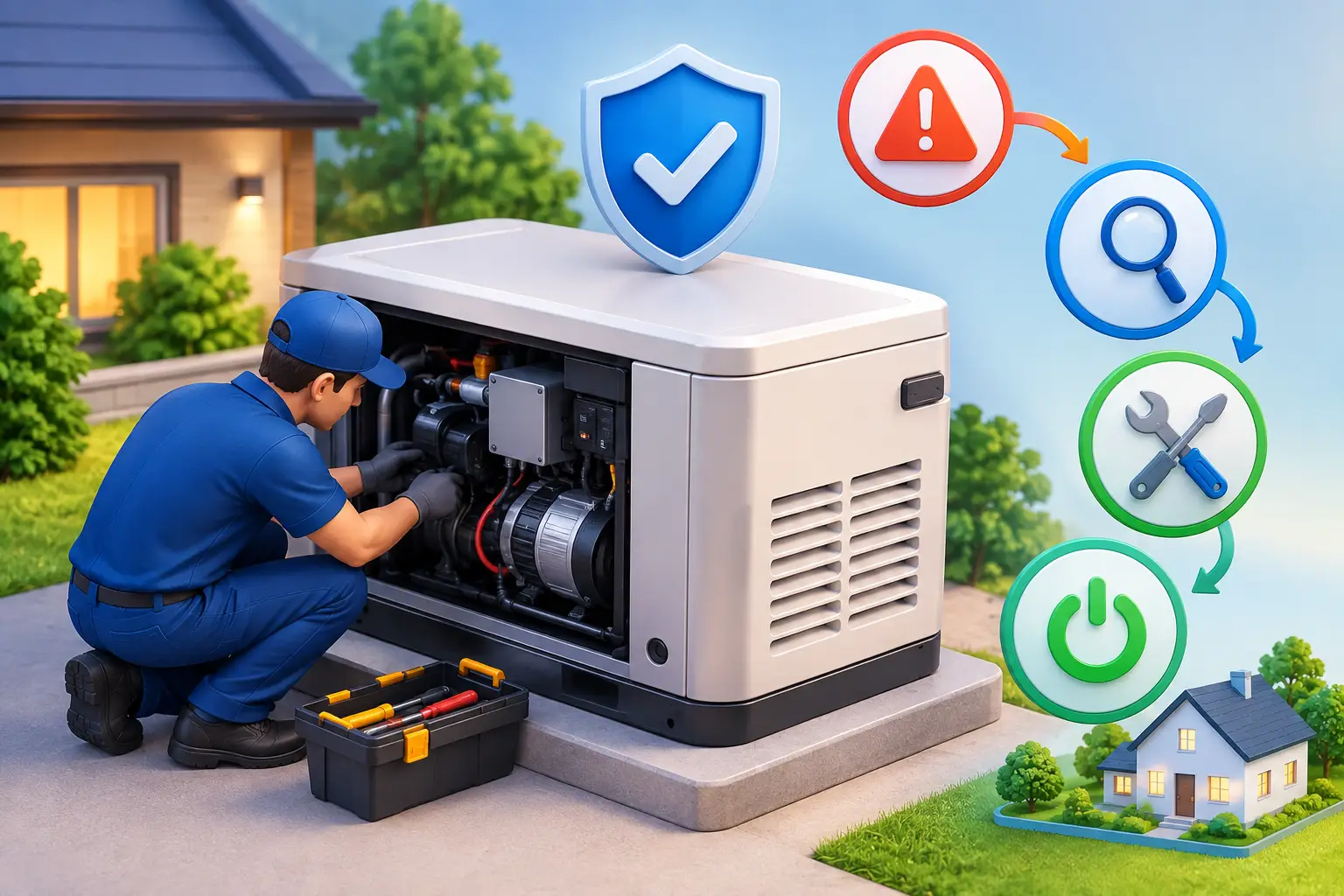
Generator failure recovery for London homes and businesses: immediate safety steps, fault checks and when to call a qualified electrician for urgent help.







A damaged cable hidden behind a wall, an overloaded consumer unit or ageing connections can all be present long before there is an obvious electrical failure. That is why the question, how often should EICR be done, matters for anyone responsible for a home, rental property or business premises in London. An Electrical Installation Condition Report identifies whether the fixed wiring and electrical installation remain safe for continued use.
The right interval is not identical for every property. It depends on how the building is used, whether it is rented, the condition and age of the installation, and the recommendations on the previous report. For landlords, there are legal duties to meet. For homeowners and commercial operators, regular inspection is a practical way to manage risk, plan remedial work and avoid more disruptive faults later.
For most properties, the following intervals are a useful starting point. They are commonly based on recognised inspection guidance, but a qualified electrician may recommend a shorter period where the installation, environment or usage calls for it.
| Property type | Typical maximum EICR interval | |—|—:| | Privately rented homes in England | Every 5 years | | Owner-occupied homes | Every 10 years | | Commercial offices and shops | Every 5 years | | Industrial premises | Every 3 years | | Construction sites | Every 3 months |
These intervals apply to the fixed electrical installation, including the consumer unit, circuits, wiring, sockets, switches, fixed lighting and earthing arrangements. They do not replace routine checks of portable electrical equipment, which may require a separate maintenance or testing programme.
The date on an existing EICR is usually the most relevant guide. A satisfactory report will state the recommended date of the next inspection. If that date is earlier than the broad intervals above, follow the electrician’s recommendation.
Private landlords in England must ensure that electrical installations in rented properties are inspected and tested at intervals of no more than five years. This requirement applies under the Electrical Safety Standards in the Private Rented Sector (England) Regulations 2020.
A landlord must provide a copy of the report to existing tenants within 28 days of the inspection, give it to a new tenant before they occupy the property, and retain a copy for the next inspection. If requested, the report must also be supplied to the local authority within seven days.
Where the report identifies work that is required, it must be completed within 28 days, or sooner if the report specifies a shorter period. Written confirmation that the work has been completed must then be obtained from a qualified person and provided to the tenant and, if requested, the local authority.
An EICR is not automatically required every time a tenant changes. However, landlords should not rely on an old report beyond its stated date, and they should arrange an inspection sooner if there is damage, a significant change to the installation or a safety concern. Licensing conditions for particular HMOs or local schemes may also impose additional requirements, so it is sensible to check the terms that apply to the property.
There is generally no legal requirement for an owner-occupier to obtain an EICR every ten years. Even so, a periodic inspection is strongly recommended, particularly for older London homes where wiring may have been altered over several decades.
A ten-year interval is suitable for many well-maintained homes, but it is not a reason to ignore warning signs. Arrange an EICR earlier after buying a property with an unclear electrical history, completing major refurbishment work, or inheriting a consumer unit and wiring system that have not been inspected for many years.
Homeowners should also act promptly if fuses or circuit breakers trip repeatedly, sockets feel warm, lights flicker, there is a burning smell, or visible damage appears around switches and outlets. These symptoms do not necessarily mean the whole installation is unsafe, but they do need professional investigation. If there is immediate danger, such as smoke, sparks or exposed live parts, switch off the supply where it is safe to do so and call an emergency electrician.
Commercial premises are often subject to more demanding conditions than a typical home. High occupancy, extended operating hours, frequent equipment use and alterations to layouts can all place greater strain on an installation. A five-year EICR is common for offices, shops, restaurants and similar commercial spaces, but the correct interval depends on the environment and the business activity.
For example, a clean office with modern wiring may be suitable for a five-year cycle. A workshop, warehouse or industrial unit may need inspection every three years because machinery, dust, moisture, vibration or heavy electrical loads increase the chance of deterioration. Construction sites require much more frequent checks due to temporary supplies and demanding site conditions.
Commercial operators should also consider their responsibilities to staff, customers, insurers and building users. An up-to-date EICR helps demonstrate that electrical risks are being managed properly. It can also identify capacity issues before adding new machinery, air conditioning, EV chargers, commercial kitchen equipment or additional workstations.
The scheduled inspection date is not the only trigger. Electrical installations change over time, and a report that was suitable last year may no longer reflect the condition of the property today.
Arrange an EICR ahead of schedule when buying or selling a property where the installation’s condition is uncertain, following flood, fire or rodent damage, or after substantial building work. It is also advisable after a major electrical alteration, especially where several circuits have been extended or changed.
In rental and commercial properties, repeated reports of tripping circuits, damaged sockets or unreliable lighting should not be treated as minor maintenance issues without investigation. A single fault may be straightforward to repair, but recurring problems can point to an overloaded circuit, poor connections, defective protective devices or deterioration elsewhere in the installation.
Properties with older fuse boards, rubber-insulated cables, aluminium wiring or signs of DIY electrical work deserve particular attention. Not every older installation will fail an EICR, but age and unknown workmanship make a proper assessment more valuable.
A qualified electrician carries out visual checks and electrical tests on the fixed installation. This includes assessing the condition of the consumer unit, earthing and bonding, circuit protection, wiring, sockets, switches and fixed accessories. Some circuits may need to be isolated briefly while testing is completed, so businesses and tenants should be advised in advance where possible.
The electrician then issues a report showing whether the installation is satisfactory or unsatisfactory. Observations are normally recorded using classification codes. C1 means danger is present and urgent action is needed. C2 means the condition is potentially dangerous and requires remedial work. FI means further investigation is needed without delay. Any C1, C2 or FI observation results in an unsatisfactory report until the issue has been addressed or investigated.
A C3 observation is a recommendation for improvement rather than a finding that makes the report unsatisfactory. For example, an installation may be safe enough to remain in service but could benefit from upgrades to meet current standards more closely. This distinction helps property owners prioritise urgent safety work without assuming that every recommendation requires immediate replacement.
Not usually. Repairing faults identified on an EICR and obtaining confirmation of remedial work does not automatically create a new five- or ten-year inspection cycle. The next inspection date is normally still the one stated on the original report, unless the electrician provides a new report with a different recommendation.
For substantial upgrades, such as a replacement consumer unit or new circuits, you should receive the appropriate electrical installation certification for that work. Keep this alongside the EICR, as it provides a clear record of what has been installed, tested and certified.
Regular EICRs are not just paperwork for a tenancy file or facilities folder. They give you a clear picture of the condition of an installation before a small defect becomes a serious disruption. If your report is due, your property has changed, or you are unsure when it was last tested, arranging an inspection with a certified electrician is the sensible next step.
Generator failure recovery for London homes and businesses: immediate safety steps, fault checks and when to call a qualified electrician for urgent help.

Security lighting helps London homes and businesses deter intruders, protect access routes and improve visibility. Guidance on choosing and proper upkeep.
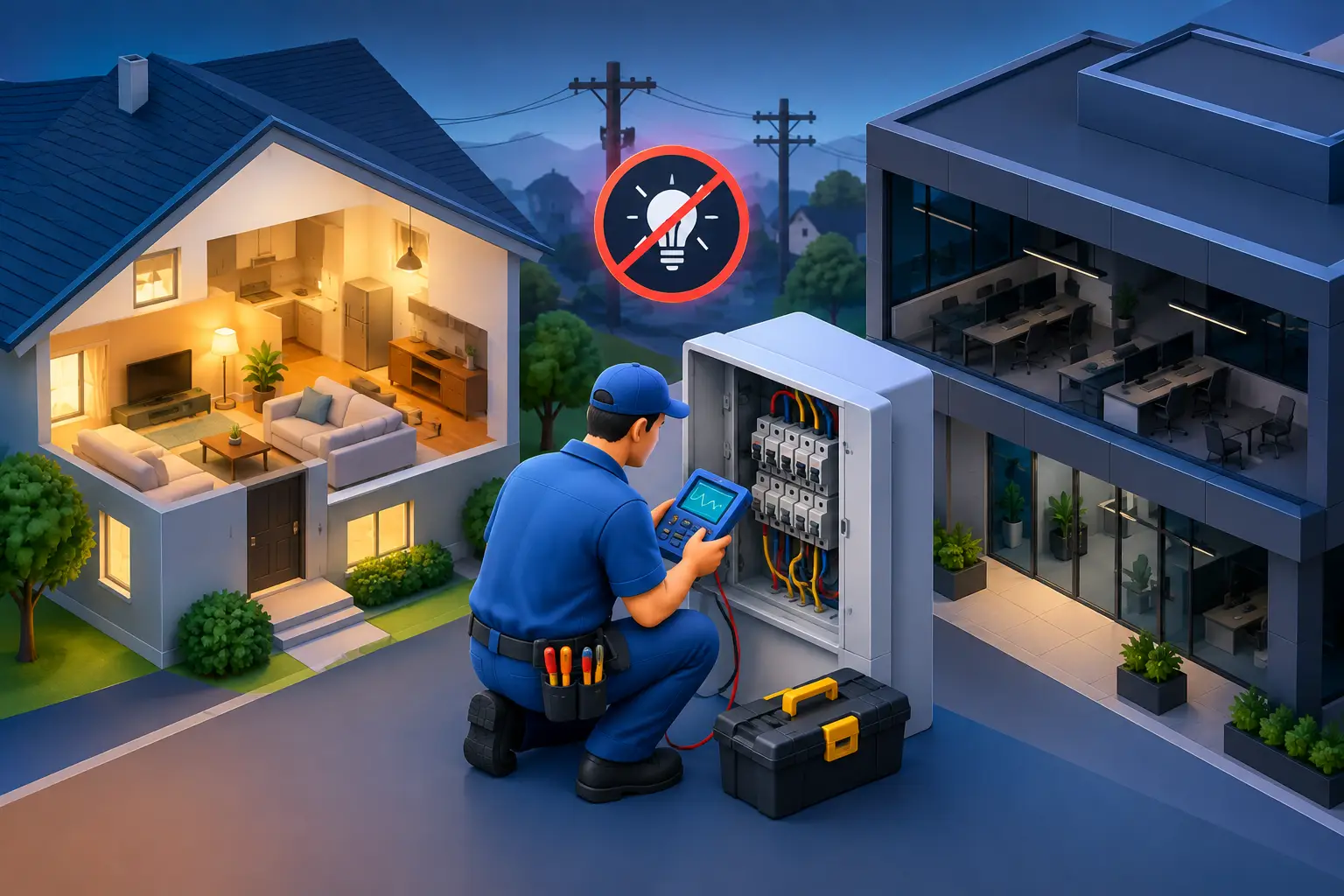
Need power cut fault diagnosis in London? Learn how to check your consumer unit safely, spot urgent risks and know when to call a...