
September 22, 2026

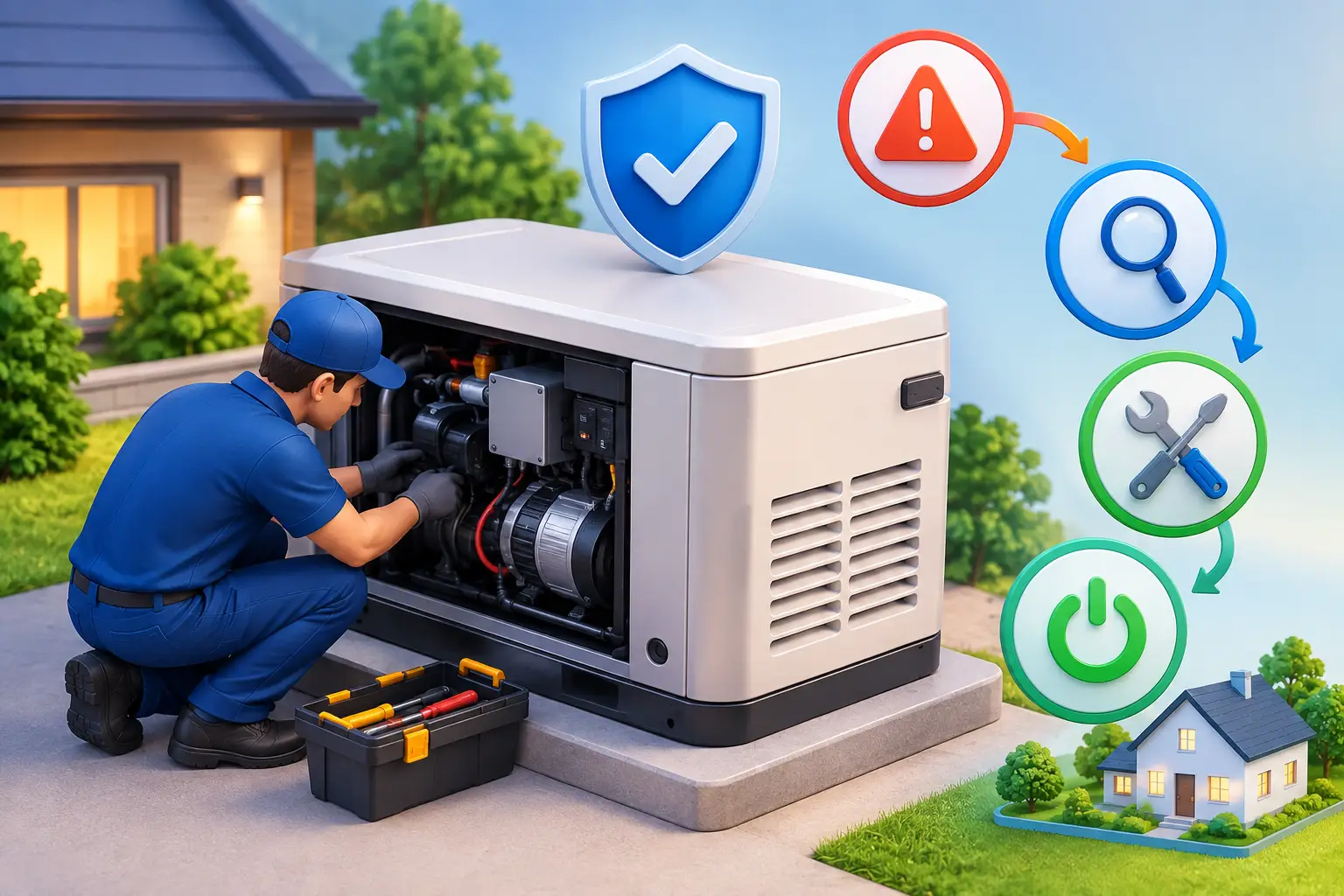
Generator failure recovery for London homes and businesses: immediate safety steps, fault checks and when to call a qualified electrician for urgent help.







A consumer unit that keeps tripping is doing a vital safety job. It is cutting the power because it has detected a fault, overload or possible electric shock risk. Knowing how to fix tripping electrics starts with identifying what has tripped and isolating the cause safely – not repeatedly forcing the power back on.
For homes, rental properties and commercial premises, a single trip can be inconvenient. Repeated tripping, burning smells, damaged sockets or signs of water near electrics need prompt attention from a qualified electrician.
Go to your consumer unit, sometimes called a fuse box. Modern units use switches rather than replaceable fuses. A switch that has moved down, or to the OFF position, is usually the one that has tripped.
There are two common types of protective device. An MCB, or miniature circuit breaker, protects a particular circuit from overloads and short circuits. This may cover sockets, lighting, the cooker, shower or another dedicated appliance circuit. An RCD, or residual current device, protects against earth leakage, where electricity may be escaping from a circuit or appliance. It is particularly important for reducing electric shock risk.
If only one MCB has tripped, the issue is likely limited to that circuit. If an RCD has tripped and several circuits have lost power, the fault could be on any circuit protected by it. Do not remove the consumer unit cover or touch any wiring inside it.
Switch off and unplug appliances on the affected circuit where possible. Start with higher-load or moisture-prone items, such as kettles, toasters, washing machines, tumble dryers, dishwashers, portable heaters, irons and outdoor equipment. Also check whether a recent change coincides with the problem, such as a new appliance, DIY work, a light fitting replacement or water ingress after heavy rain.
Before attempting a reset, look for warning signs. Stop and arrange urgent electrical assistance if you notice a burning smell, scorch marks, crackling, buzzing, a hot socket or consumer unit, exposed cables, flooding, or a person receiving an electric shock. Do not touch damaged equipment, and never use water on an electrical fire. If there is immediate danger, leave the area and contact the emergency services.
If there are no visible signs of danger, move the tripped switch fully to OFF first, then back to ON. If it stays on, reconnect appliances one at a time. Give each one a few moments before connecting the next.
If the circuit trips when a specific appliance is plugged in or switched on, leave that appliance unplugged. The appliance, its flex or its plug may be faulty and should be repaired, replaced or tested by a competent professional. Do not keep using it simply because it appears to work on another socket.
An overload happens when too much demand is placed on one circuit. This is common in older London properties, where socket circuits may be serving more rooms or appliances than expected. A circuit may trip when several high-wattage appliances run at once – for example, a kettle, microwave, toaster and portable heater in the same kitchen or adjoining rooms.
The practical fix is to reduce the load. Spread appliances across suitable circuits where safe to do so, and avoid running multiple high-demand appliances from extension leads or multi-way adaptors. Extension leads are intended for temporary use, not as a permanent answer to too few sockets.
If overloads are frequent, the long-term solution may involve additional sockets, a dedicated circuit for a demanding appliance, or an assessment of the consumer unit and existing installation. Simply fitting a larger breaker is not a safe fix. The breaker rating must match the cable size, circuit design and installation conditions.
Appliances are a common source of RCD tripping, especially those that use water or generate heat. A washing machine may trip only during a heating cycle. A fridge freezer may trip intermittently as its compressor starts. Outdoor tools can develop faults when cables are wet or damaged.
Use the unplug-and-reconnect method to narrow down the likely appliance, but treat this as basic fault finding rather than a repair. Do not open an appliance casing, replace internal parts or continue resetting an RCD to keep it running. An electrical fault can worsen quickly and may present a fire or shock hazard.
Check the plug and lead for obvious damage, including crushed cable, loose pins, melted plastic or discolouration. If anything looks damaged, leave it disconnected. For landlords and commercial operators, keep a record of the appliance, the circuit affected and when the trip occurred. This information helps an electrician diagnose the fault efficiently.
Lighting faults are often caused by a failed bulb, a loose connection, a damaged fitting or moisture in an outside light. LED lamps can also reveal problems with incompatible dimmer switches or poor-quality drivers.
Turn off the lighting circuit at the consumer unit before changing a bulb. Use the correct bulb type and wattage for the fitting. If the circuit trips again after a bulb change, or a fitting is loose, cracked, wet or unusually warm, stop using that circuit and call an electrician.
Bathroom, kitchen and external lighting deserve particular care because water increases the risk. Outdoor lights that trip after rain may have water entering a fitting, junction box or cable connection. Sealing over the problem without finding the entry point is unlikely to provide a reliable repair.
An RCD that will not reset even after appliances are unplugged may indicate a fixed-wiring fault. Possible causes include damaged cable insulation, a fault in a socket or light fitting, moisture in an external circuit, an issue with underfloor heating, or a problem created during recent building work.
This is not a situation to solve by trial and error. Fixed wiring faults require proper testing with specialist equipment. A qualified electrician can carry out insulation resistance, continuity and earth fault testing to locate the issue without guessing or causing further damage.
In rented properties, electrical safety obligations also matter. A recurring trip should be investigated, documented and repaired properly rather than treated as a tenant nuisance. Commercial premises should take the same approach, particularly where tripping affects emergency lighting, refrigeration, IT equipment, security systems or customer-facing areas.
Call for urgent help if the consumer unit will not reset, power loss affects essential equipment, or there are signs of overheating, smoke, sparks, water damage or electric shock. Businesses may also need a rapid response where a fault risks closing the premises, damaging stock or compromising safety systems.
For non-urgent but recurring faults, book an inspection rather than waiting for the next trip. An electrician can establish whether the issue is an appliance, circuit overload, ageing wiring, a faulty protective device or a wider consumer unit problem. The right repair depends on the test results and the condition of the installation.
EDL Electrical provides qualified electrical fault finding and emergency support across London, with repairs carried out to current safety requirements. A professional diagnosis protects your property, reduces repeat disruption and avoids the false reassurance of a switch that happens to reset.
A tripped breaker is not an inconvenience to override – it is a warning worth listening to. Isolate what you can safely, leave suspect equipment disconnected, and arrange expert help when the cause is unclear or the problem returns.
Generator failure recovery for London homes and businesses: immediate safety steps, fault checks and when to call a qualified electrician for urgent help.

Security lighting helps London homes and businesses deter intruders, protect access routes and improve visibility. Guidance on choosing and proper upkeep.
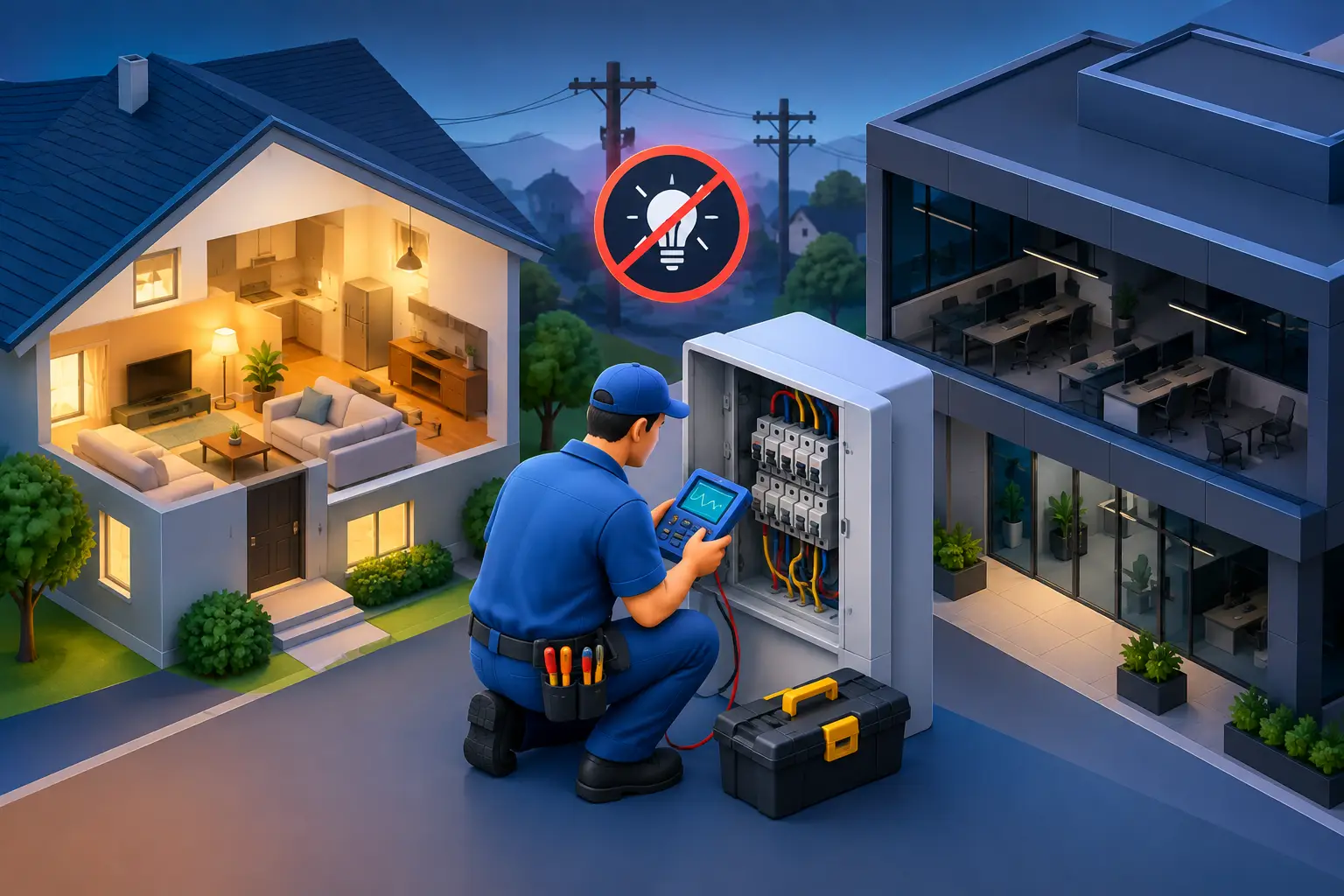
Need power cut fault diagnosis in London? Learn how to check your consumer unit safely, spot urgent risks and know when to call a...