
September 14, 2026

Decide whether to rewire or partial rewire your London property, recognise warning signs and plan safe, compliant work with a certified electrician today.







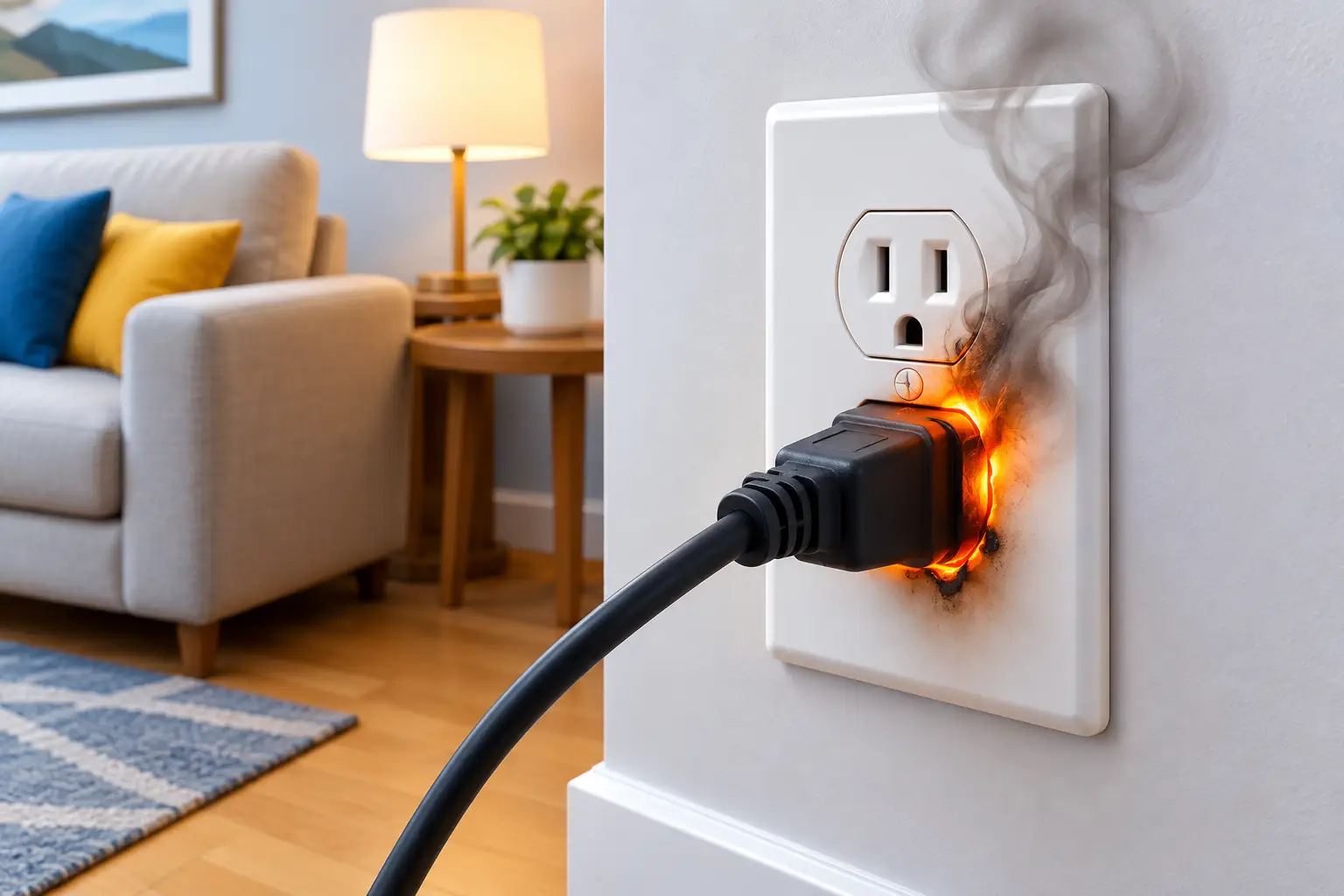
A burning smell near a plug socket, a brown mark on the faceplate or a plug that feels unusually hot is not a minor inconvenience. These are potential signs of overheating within the electrical installation. If you are asking what causes burning sockets, treat the issue as urgent: stop using the socket immediately, switch off the relevant circuit at the consumer unit if it is safe to do so, and arrange for a qualified electrician to investigate.
Burning sockets are usually caused by heat building up where electricity meets resistance. A socket outlet should carry electricity without becoming hot. When a connection is loose, a component is damaged, a circuit is overloaded or unsuitable equipment is used, electricity can struggle to pass through as intended. The resulting resistance produces heat, which can scorch plastic, damage cable insulation and, in serious cases, create a fire risk.
The visible socket is often only part of the problem. The fault may be in the socket terminals, the plug, the cable behind the wall, the circuit wiring or the appliance connected to it. This is why replacing a discoloured faceplate without testing the circuit is not a reliable repair.
Loose terminals are one of the most common causes of overheating. If the wires behind a socket have not been secured correctly, have worked loose over time, or have been disturbed during decorating or previous work, the electrical contact becomes poor. Current then passes through a smaller effective contact area, creating heat at the connection.
This can happen in older properties where fittings have seen decades of use, but it can also occur after poor-quality installation work. A loose connection may produce crackling, intermittent power, a smell of hot plastic or localised scorching around the socket. The wiring and terminals need inspection, repair and testing by a qualified electrician before the circuit is used again.
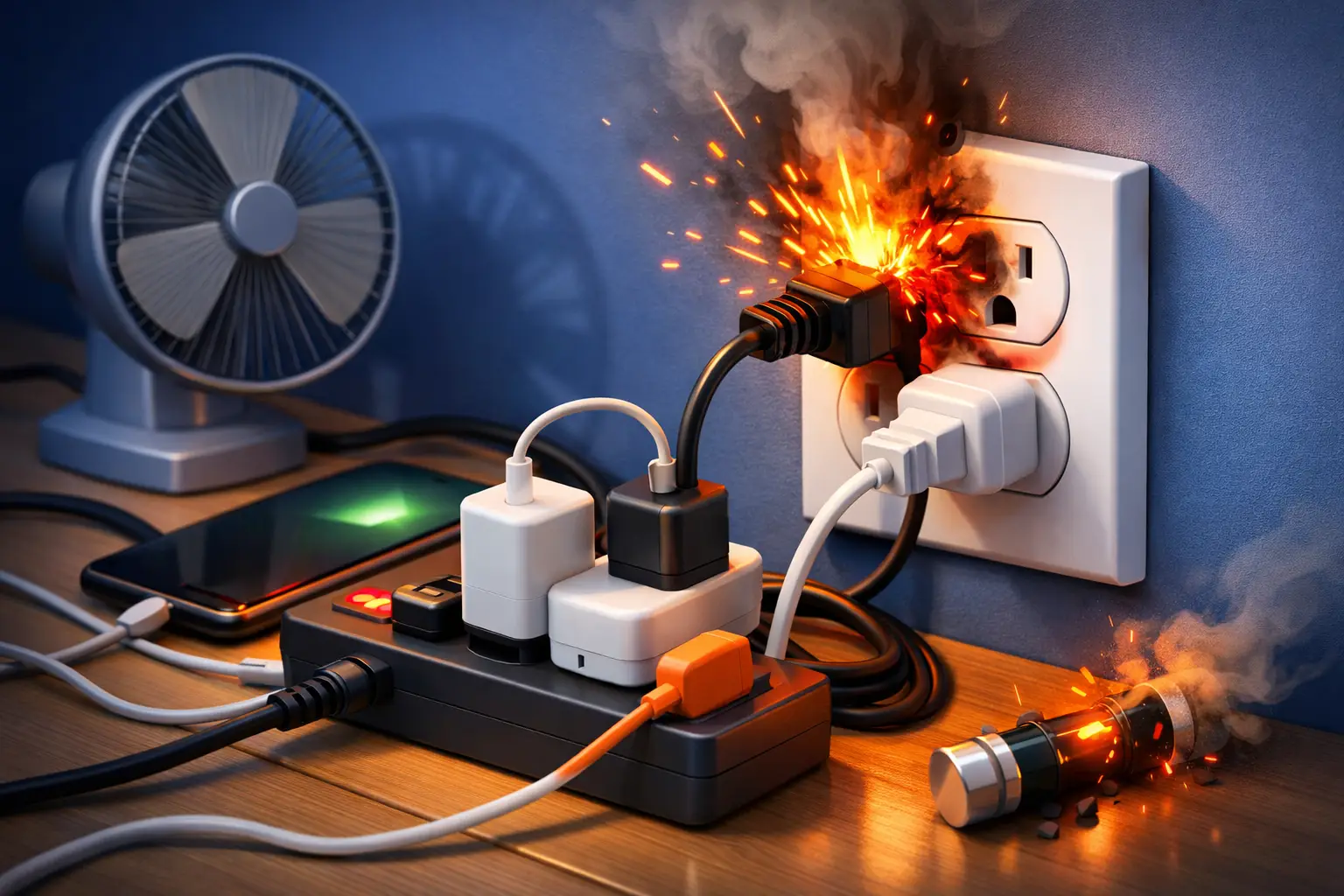
A standard socket is not designed to power unlimited equipment simply because several plugs can physically fit into an extension lead. High-demand appliances such as portable heaters, tumble dryers, kettles, microwaves, washing machines and electric vehicle charging equipment can draw significant current. Connecting several of these to one socket, especially through multi-way adaptors, can overload the plug, lead or socket connection.
Extension leads are useful for temporary, light-duty use. They are not a permanent substitute for sufficient fixed sockets. Daisy-chaining one extension lead into another, running leads beneath rugs, or using worn adaptors increases the chance of overheating. In offices, shops and rental properties, overloaded extension blocks behind desks or counters are a particularly common hidden hazard.
Sometimes the socket is not the source of the fault. A plug with loose pins, a split flex, damaged insulation or a poorly fitted fuse can overheat at the point of connection. A faulty appliance may also draw more current than it should, creating excessive heat or repeated tripping.
Check whether the heat or discolouration appears on one particular plug rather than every item used in the socket. Do not test this by plugging other appliances into a visibly damaged outlet. Instead, leave the socket unused and keep the suspect appliance disconnected until it has been checked. A competent electrician can assess the socket and circuit, while a suitably qualified appliance repair professional may be needed for the appliance itself.
Socket outlets do not last indefinitely. Repeated plugging and unplugging can wear internal contacts, reducing their grip on plug pins. A plug that hangs loosely or falls out easily may not make a sound electrical connection. That can cause arcing – tiny electrical discharges that generate intense local heat.
Cracked faceplates, broken shutters, melted plastic and discolouration are all reasons to stop using a socket. Moisture, impact damage and poor previous repairs can also affect the condition of fittings. In kitchens, utility rooms, bathrooms and commercial spaces, the correct location and type of accessory matters as much as the visible finish.
A burning socket can point to a wider issue with the circuit. Old wiring, damaged cable insulation, incorrect cable sizing, poor connections in junction boxes or faults at the consumer unit can all contribute to overheating. Properties that have been extended, converted or repeatedly altered may have circuits that no longer suit how the space is used.
For example, a room that once powered a lamp and television may now serve as a home office with monitors, chargers, printers and heaters. A kitchen may have gained several high-load appliances without adequate circuit upgrades. The answer is not always a complete rewire, but the installation should be assessed properly rather than repeatedly patched.
Some electrical faults develop gradually, while others become dangerous quickly. Switch off and avoid using the affected circuit if you notice a burning smell, smoke, sparks, buzzing, crackling, visible charring, melting, a hot faceplate or a plug that is difficult to remove because it has fused or distorted.
If there is smoke, fire or an immediate threat to people or property, call the emergency services. Do not pour water on an electrical fire. If it can be done without approaching the hazard or touching damaged equipment, isolate the electricity at the main switch. Otherwise, leave the area and wait for help.
A socket that trips the circuit breaker or RCD repeatedly also needs investigation. Resetting it once may be appropriate after an obvious temporary cause has been removed, such as a known faulty appliance. Repeated resets without finding the cause can allow a dangerous fault to continue.
Do not continue using a socket because it still works. Electrical damage can remain hidden behind the wall, and heat may have compromised insulation that is not visible from the room. Do not remove the faceplate, tighten terminals or replace a socket yourself unless you are competent to carry out the work safely and can verify the installation afterwards.
You can take sensible precautions while waiting for an electrician. Unplug appliances only if the plug and socket are cool and safe to touch. Keep children, tenants, staff and visitors away from the affected area. Make a note of what was connected, whether the circuit tripped and when you first noticed the problem. These details can help identify the cause.
For landlords and commercial operators, record the fault and the action taken. A burning outlet may affect wider electrical safety responsibilities, particularly where tenants, employees or customers could access the installation. Prompt professional attention protects people as well as the building.
A proper inspection begins with making the area safe. The electrician will check the socket, plug and connected equipment, then examine the condition of the circuit and its protective devices. Testing may include continuity, insulation resistance, polarity, earth fault loop impedance and RCD operation, depending on the installation and symptoms.
The aim is to establish whether the problem is local to one accessory or part of a larger defect. A damaged socket may need replacement, but the electrician should also inspect the cable terminations and test that the circuit disconnects correctly under fault conditions. Where loading is the issue, options may include adding sockets, installing a new circuit, upgrading the consumer unit or redistributing appliances across suitable circuits.
The right solution depends on the property, the age and condition of the wiring, and the electrical demand. A modern flat with one damaged accessory requires a different response from an older London property with recurring heat damage and an outdated consumer unit.
The most effective prevention is to use sockets as intended and address warning signs early. Avoid permanent reliance on adaptors for high-load appliances, replace damaged plugs and leads promptly, and ensure heaters, kitchen appliances and other power-hungry equipment have suitable fixed supplies.
Periodic electrical inspection is particularly valuable in older homes, rental properties and commercial premises where circuits receive heavy use. It can identify loose connections, worn accessories and defects that may not be obvious day to day. Landlords should also keep required electrical safety inspections current and act on observations in the report.
If a socket has become hot, smells burnt or shows any sign of scorching, give it the same priority you would give a leaking pipe near electrical equipment: stop using it and get it assessed. Fast action by a qualified electrician can turn a worrying warning sign into a straightforward repair before it develops into a more serious incident.
Decide whether to rewire or partial rewire your London property, recognise warning signs and plan safe, compliant work with a certified electrician today.
Spot overloaded circuit symptoms early, reduce electrical risk and know when a qualified London electrician should inspect your home or business wiring.
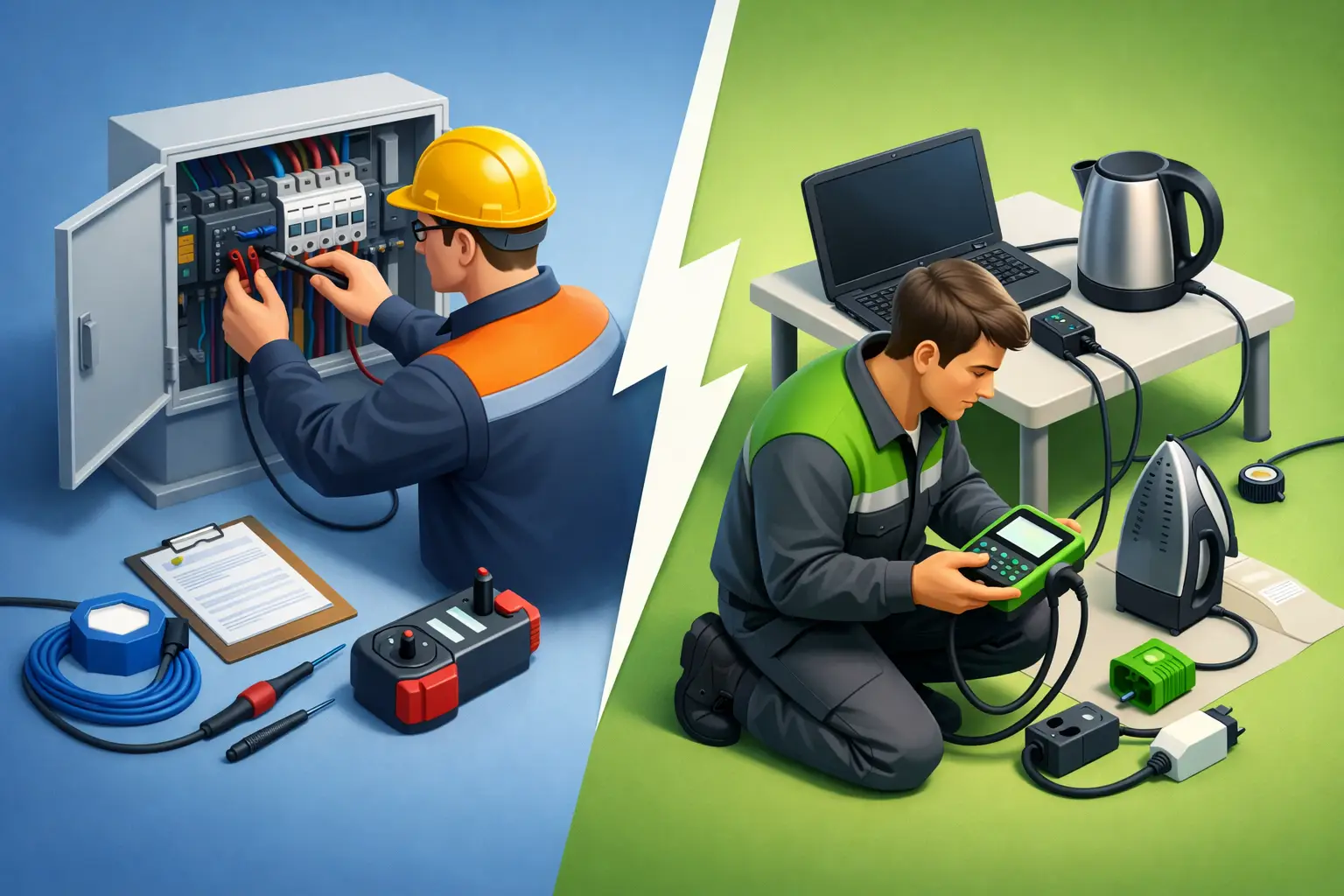
EICR versus PAT testing explained for London landlords, homeowners and businesses: what these checks cover, when it is needed, and how they work together.