November 13, 2026

Compare the best home surge protectors for UK properties, from consumer-unit SPDs to plug-in units, and choose the right level of protection at home.







A sudden loss of power can be unsettling, particularly when it happens at night, during a busy working day or after plugging in an appliance you use every day. If you are asking, why does my RCD trip, the short answer is that it has detected a potential electrical fault and disconnected the supply to reduce the risk of electric shock or fire. The interruption is inconvenient, but the device is doing an essential safety job.
An RCD trip is not something to ignore or repeatedly reset without checking the cause. Some faults are straightforward, such as a damp outdoor socket or a failing kettle. Others may involve fixed wiring, a circuit or the consumer unit itself and need professional investigation.
An RCD, short for residual current device, monitors the flow of electricity through a circuit. Under normal conditions, the current flowing out through the live conductor should match the current returning through the neutral conductor. If some electricity is leaking elsewhere, possibly through damaged insulation, moisture or a person, the RCD reacts quickly and switches off.
This is different from a circuit breaker or MCB, which is designed primarily to protect against overloads and short circuits. An RCD protects people as well as the installation by responding to earth leakage. Many modern consumer units use RCBOs, which combine these protections on individual circuits. Older boards may have one RCD protecting several circuits, so a single fault can leave much of a property without power.
The occasional trip can be a useful warning. A recurring trip, however, needs a proper diagnosis. Resetting it may restore power temporarily, but it does not repair damaged equipment or wiring.
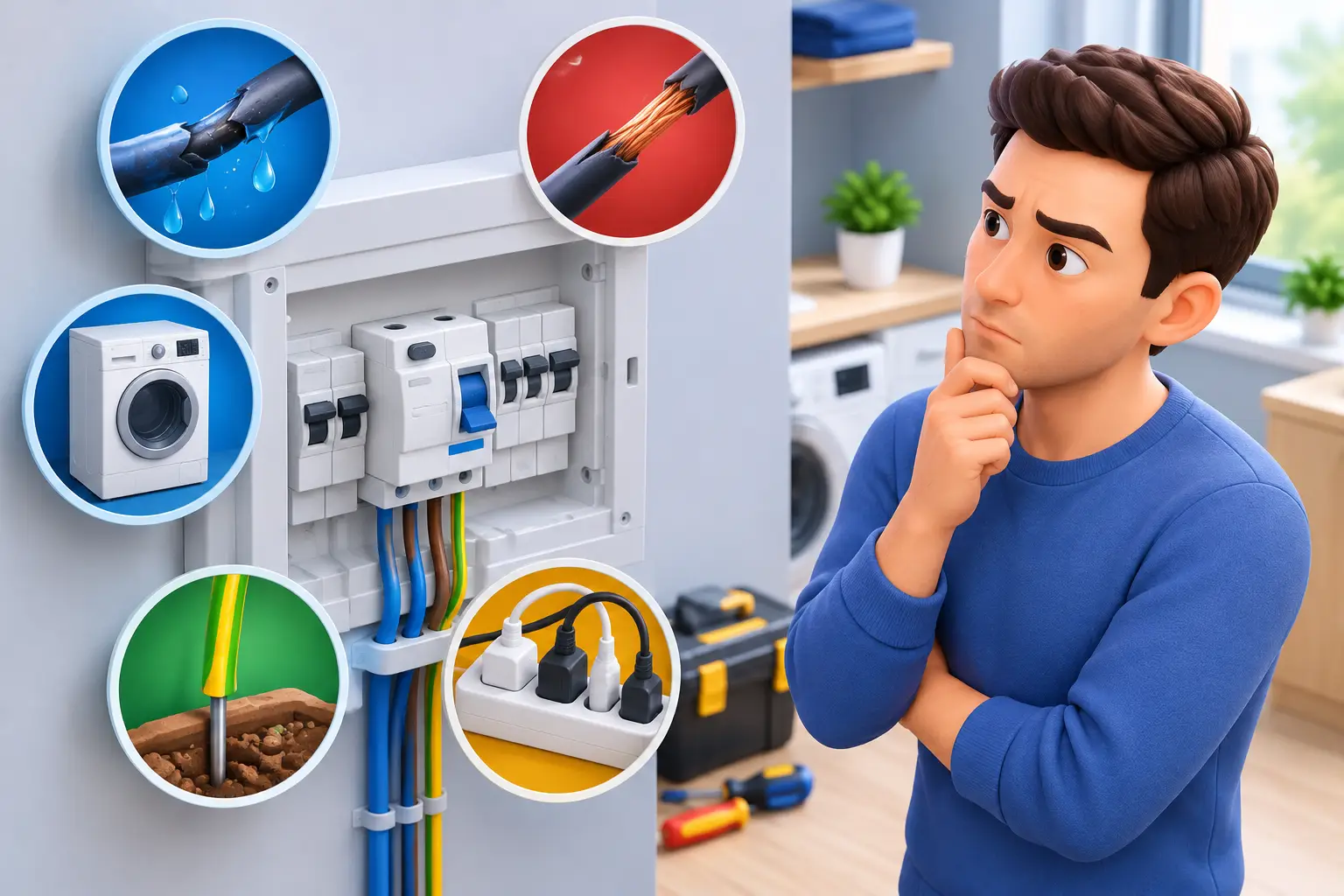
A faulty appliance is one of the most common reasons. Heating elements in kettles, washing machines, dishwashers, tumble dryers and immersion heaters can deteriorate over time. When switched on, they may leak a small amount of current to earth, enough to operate the RCD. Chargers, extension leads, power tools and older entertainment equipment can also be responsible.
Moisture is another frequent cause, especially in London properties with external sockets, garden lighting, garages, basements or bathrooms. Water and condensation can enter a fitting, cable joint or appliance and create a path for leakage current. A trip that occurs after heavy rain, after using an outdoor socket or when a bathroom extractor fan runs is a useful clue.
Damaged wiring should be taken seriously. A cable may have been pierced by a screw or nail, chewed by rodents, damaged during building work or degraded by age. Loose connections, deteriorated insulation and incorrectly installed accessories can all create intermittent faults. These are often more difficult to identify because the RCD may trip only when a particular circuit is loaded or moved.
Some modern appliances naturally produce a small amount of earth leakage. In a property with several computers, LED drivers, EV chargers, induction hobs, heat pumps or commercial equipment, the combined leakage can become high enough to trip an RCD even when no single appliance appears faulty. This does not necessarily mean the RCD is defective. It may mean the circuits need to be assessed, separated or protected differently by a qualified electrician.
A damaged or ageing RCD can also be at fault, although this is less common than an appliance or circuit issue. The only reliable way to establish its condition is with the correct test equipment. The test button is useful for checking that the mechanism operates, but it does not prove the device trips at the required speed or leakage level.
Notice what is happening immediately before the power goes off. If the RCD trips as soon as you plug in one appliance, that item or its lead is a strong suspect. If it trips when you turn on a particular circuit breaker, the issue is more likely to be on that circuit or among equipment connected to it.
An RCD that trips instantly and will not reset may indicate an ongoing fault. Do not force the switch into position. If it resets but trips later, think about what changes at that point: a washing cycle reaching its heating stage, a fridge compressor starting, exterior lighting coming on at dusk or rain reaching an outdoor fitting.
In commercial premises, timing can be especially revealing. A trip occurring when staff arrive may relate to kitchen equipment, IT equipment or a particular area being energised. A fault linked to closing time may involve signage, security lighting or timed controls. Recording the time, affected circuits and equipment in use will help an electrician trace intermittent problems more efficiently.
Start by checking whether there is a wider power cut. If neighbouring properties or communal areas are also affected, the issue could be outside your installation. If only your property is affected and the RCD has tripped, switch off or unplug portable appliances where it is safe to do so.
At the consumer unit, turn off the individual circuit breakers first, then reset the RCD once. If it stays on, restore circuits one at a time. When a particular circuit causes the RCD to trip, leave that circuit switched off. You can then unplug appliances connected to it and try again, restoring them one by one to identify whether a particular item is involved.
Do not dismantle sockets, remove consumer unit covers, touch exposed wiring or work on a wet area. Never replace an RCD with a higher-rated device or bypass it to keep power on. Those actions can remove vital protection and create a serious shock or fire risk.
If you identify a likely faulty appliance, keep it unplugged and arrange repair or replacement. If the fault remains with everything disconnected, or a circuit will not stay on, the issue is likely within the fixed installation and requires testing by a qualified electrician.
Call for urgent electrical assistance if you notice burning smells, scorch marks, buzzing, smoke, sparking, heat around sockets or the consumer unit, or signs of water ingress near electrical equipment. Switch off the supply only if it is safe to do so and keep clear of affected areas.
A trip following flooding, a burst pipe or serious water leak also needs professional attention before circuits are used again. Water can remain inside accessories, junctions and cables long after the visible surface has dried.
For landlords and property managers, repeated RCD trips should be dealt with promptly. Aside from the immediate safety concern, tenants may be left without lighting, refrigeration, heating controls or essential power. A clear record of the fault, repair and any inspection work supports responsible property maintenance and electrical safety compliance.
A qualified electrician will not rely on guesswork. They will identify which RCD and circuit are affected, inspect accessible equipment and test the installation using specialist instruments. Insulation resistance testing, earth continuity testing and leakage measurements can reveal faults that are not visible from the outside.
The solution depends on the result. It could be as simple as replacing a damaged appliance lead or weatherproof accessory. It may require repairing cable damage, replacing a defective circuit accessory, improving circuit arrangement or upgrading an outdated consumer unit. In properties with multiple electronic loads, an electrician may recommend RCBO protection to limit a fault to the affected circuit rather than shutting down a larger part of the building.
EDL Electrical provides responsive fault-finding for homes, rental properties and commercial premises across London, including urgent support where a persistent trip has left a circuit unsafe or unusable.
Do not overload extension leads, and replace damaged leads rather than taping them up. Use suitable weatherproof fittings outdoors, avoid storing electrical equipment in damp areas and have fixed wiring checked after major alterations or water damage. Regular inspection is particularly valuable in older homes, rental properties and busy commercial settings where electrical equipment changes frequently.
Most importantly, treat an RCD trip as useful information rather than a nuisance. Leaving a suspect circuit off while the cause is investigated may be inconvenient, but it is the safer choice and gives you the best chance of preventing a small fault becoming a more serious problem.
Compare the best home surge protectors for UK properties, from consumer-unit SPDs to plug-in units, and choose the right level of protection at home.
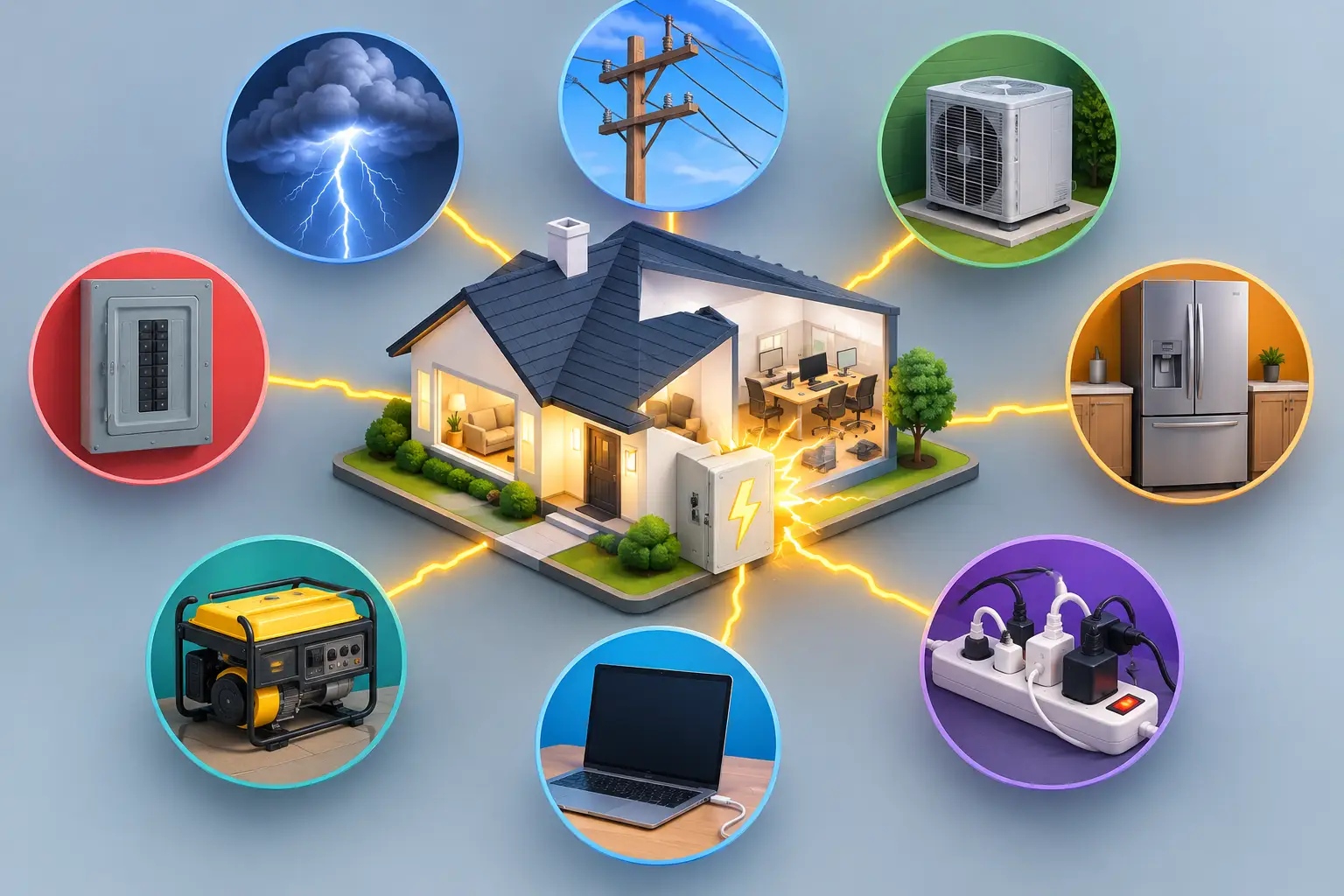
Learn the most common power surge causes in London properties, the warning signs to act on, and how certified protection keeps people and equipment...
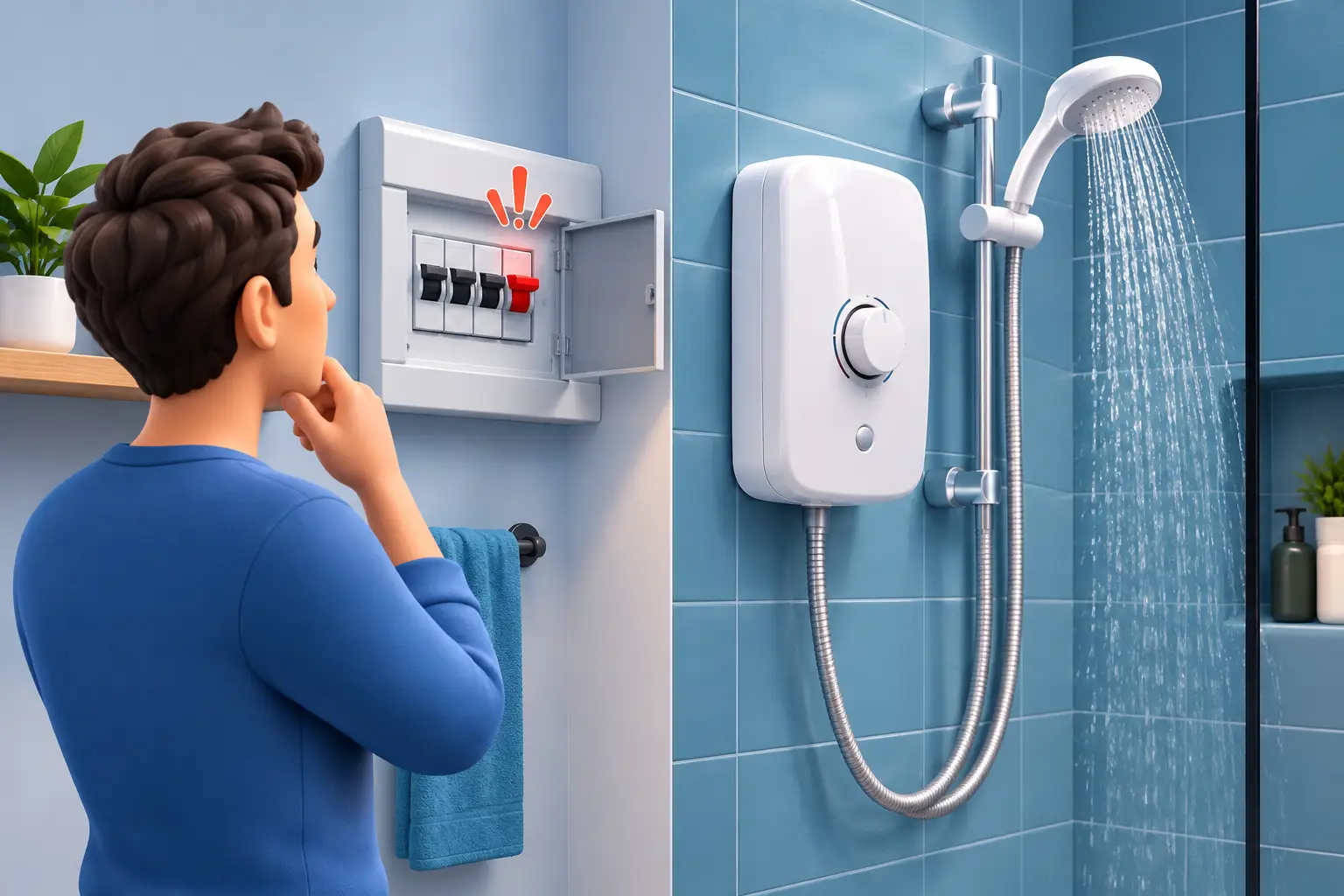
Electric shower keeps tripping? Learn the likely causes, what you can safely check and when to call a qualified London electrician for a lasting...