
August 9, 2026

Choose the best outdoor security lighting for your London property, from PIR sensors to dusk-to-dawn fittings, with safe installation advice for homes.







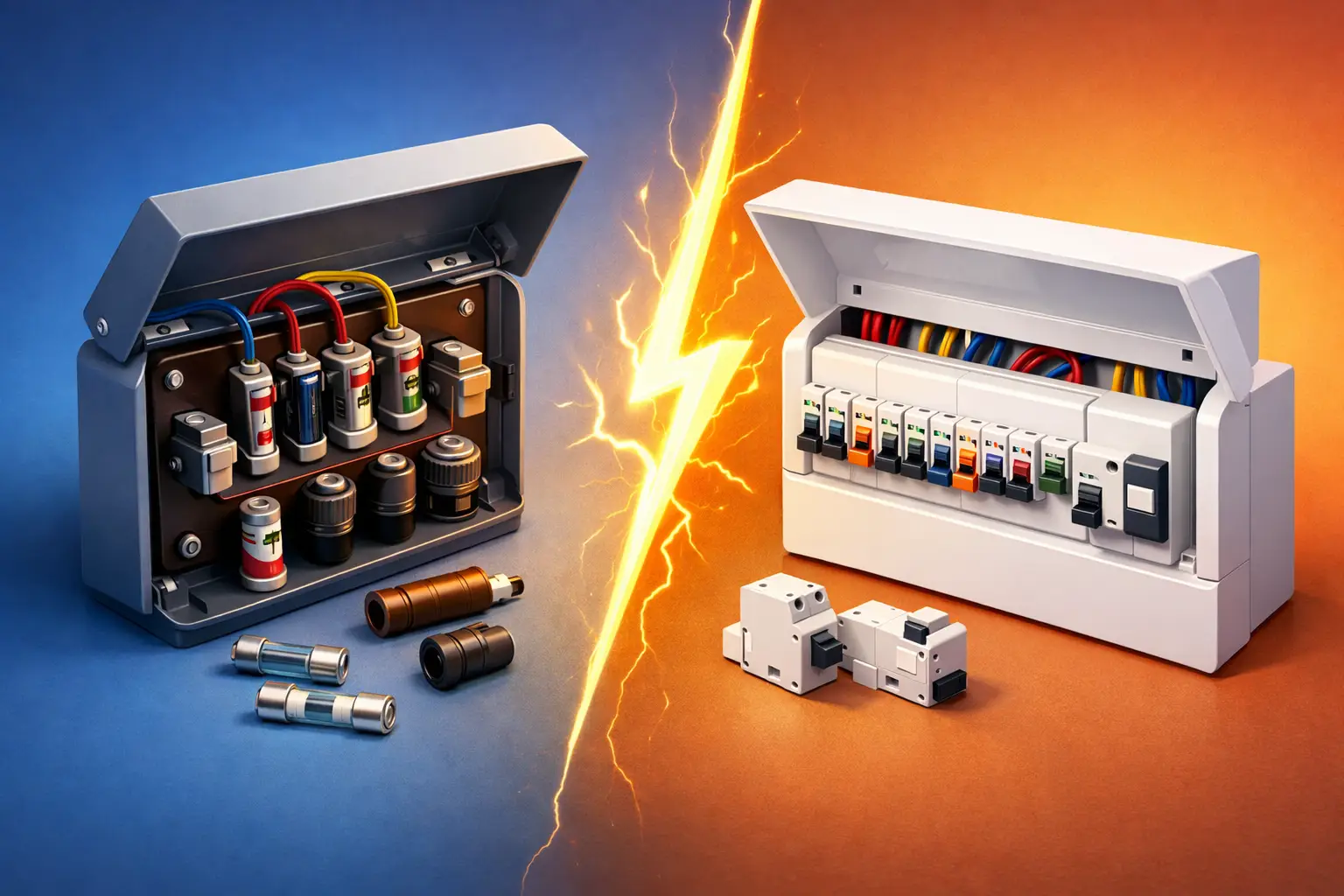
A fuse box vs consumer unit comparison is not simply a question of old versus new. Your electrical distribution board is the point that protects circuits throughout the property, from lighting and sockets to showers, cookers and fixed appliances. If it is outdated, damaged or poorly configured, a fault may present a greater risk to people, equipment and the building.
For London homeowners, landlords and business owners, understanding the difference helps with maintenance planning, EICR recommendations and decisions about an upgrade. The right answer depends on the installation’s condition, its use and the protection already in place – not just its age.
A traditional fuse box uses rewireable fuses or cartridge fuses to protect individual circuits from overcurrent. When too much current passes through a circuit, the fuse element melts and disconnects the supply. This can prevent cable overheating, but replacing a blown fuse requires the correct fuse wire or cartridge and an understanding of why it operated.
A modern consumer unit performs the same central distribution role but uses resettable protective devices, usually miniature circuit breakers (MCBs) and residual current devices (RCDs), or individual RCBOs. Instead of replacing wire after a fault, the relevant device can often be reset once the fault has been identified and resolved.
The larger difference is the level of protection. Modern consumer units are designed to provide more effective safeguards against electric shock, overloads and certain fault conditions. They also make it easier to isolate a single circuit for testing or repair, rather than affecting a wider area of the property.
An MCB protects a circuit against overloads and short circuits. For example, if a socket circuit is overloaded or a cable develops a short circuit, the MCB should trip quickly to limit damage.
An RCD monitors the balance of current flowing in and out of a circuit. If it detects current leaking to earth – which can happen through damaged equipment, faulty wiring or accidental contact – it disconnects the supply rapidly. This additional protection is particularly relevant in bathrooms, kitchens, outdoor areas and circuits supplying portable equipment.
Many current installations use RCBOs. An RCBO combines overcurrent and residual-current protection for one individual circuit. If a fault occurs on a single circuit, such as the washing machine supply, only that circuit is likely to trip. Lights and other sockets can remain operational, which is useful in homes, rental properties and commercial premises where unnecessary downtime is disruptive.
A consumer unit may also include surge protection. Surge protective devices help reduce the risk of damage caused by transient voltage spikes, including those associated with events on the wider electrical network. Whether surge protection is needed should be determined through a proper assessment of the installation and the equipment it serves.
Not every old fuse box is automatically dangerous, and replacing it is not always an emergency. A properly maintained older installation may continue to operate, particularly where there have been no alterations and an inspection finds no significant defects.
However, old-style fuse boxes can lack RCD protection, have unsuitable fuse ratings, show signs of overheating, or contain modifications that do not meet current safety expectations. A loose cover, exposed live parts, scorch marks, repeatedly blowing fuses or a burning smell all require urgent attention. Do not remove covers or attempt a repair yourself.
Age also matters in context. If a property has gained an electric shower, induction hob, loft conversion, garden office, EV charger or more powerful kitchen appliances over the years, the original board and cabling may no longer be suitable for the electrical demand. A consumer unit upgrade may be part of a wider improvement rather than a standalone fix.
An Electrical Installation Condition Report, commonly called an EICR, is the sensible starting point when you are unsure. A qualified electrician can assess the consumer unit, protective devices, earthing and bonding, wiring condition, circuit arrangements and signs of deterioration. This identifies whether remedial work or replacement is required.
A replacement is commonly recommended where the existing board has no RCD protection, fuse carriers are damaged, circuits are incorrectly protected, the unit is overcrowded, or testing reveals faults that cannot be addressed safely within the existing equipment. It may also be advisable before significant renovation or when adding new high-load circuits.
Landlords should take particular care. Electrical safety duties require rental installations to be inspected and tested at the appropriate intervals, with remedial issues addressed promptly. An unsatisfactory EICR does not always mean the consumer unit must be replaced, but it can make clear when an upgrade is the correct route to a safer, compliant installation.
For businesses, the decision often centres on continuity as well as safety. A board that trips frequently, has limited capacity or cannot safely accommodate new equipment can interrupt trading, affect IT systems and create avoidable maintenance costs. Planned replacement is generally less disruptive than responding after a failure.
Replacing a consumer unit is not a like-for-like cosmetic swap. The electrician must inspect and test the installation carefully before connecting it to a new board. Existing defects can become apparent during this process, especially in older London properties where wiring has been altered over several decades.
The work normally involves isolating the supply, removing the existing board, fitting the new consumer unit, connecting and labelling circuits, and carrying out verification tests. Earthing and bonding arrangements must also be checked. If faults are found in cables, accessories or circuit design, these should be repaired before the upgraded board is put into service.
There may be a short planned loss of power while the work takes place. For a household, this means arranging access to appliances, alarms and internet equipment. In commercial premises, it may mean scheduling work outside trading hours or coordinating a controlled shutdown. A professional electrician will explain the likely programme beforehand and identify anything that needs to be made safe first.
On completion, you should receive the appropriate electrical certification. This paperwork matters when selling a property, responding to an EICR, managing a tenancy or demonstrating that electrical work has been completed correctly.
The best consumer unit is not necessarily the largest one. It should have suitable capacity for current circuits and sensible allowance for anticipated additions, without turning spare ways into a substitute for proper design. The specification should reflect the property’s supply arrangement, circuit types, expected loads and the level of continuity needed.
For a typical home, individual RCBO protection can be a practical option because it limits disruption from a single fault. For a landlord, clear labelling and a durable, properly tested installation support easier future maintenance. In a shop, office or mixed-use building, the arrangement may need to account for separate areas, specialist equipment, emergency lighting or three-phase supplies.
The consumer unit enclosure should also be appropriate for its location and installed accessibly. A board hidden behind fixed furniture or placed where it cannot be safely reached is difficult to inspect, isolate and maintain. Good workmanship is as important as the equipment selected.
Call a qualified electrician promptly if your fuse box or consumer unit is hot to the touch, makes buzzing sounds, smells of burning, has visible damage, or trips repeatedly. Switch off affected circuits if it is safe to do so, but do not keep resetting a breaker in the hope that the issue will disappear. Repeated tripping is the system doing its job by signalling a fault.
If there is smoke, fire, severe damage or an immediate risk of electric shock, keep clear of the installation and seek urgent help. For less immediate concerns, a professional inspection gives you a clear, evidence-based view of the condition of your electrical system and the work, if any, that is genuinely needed.
A well-specified consumer unit does more than bring a property up to date. It gives you clearer control when a fault occurs, stronger protection for the people using the building and a sound foundation for future electrical work. When safety is uncertain, arranging a qualified assessment is the most practical next step.
Choose the best outdoor security lighting for your London property, from PIR sensors to dusk-to-dawn fittings, with safe installation advice for homes.
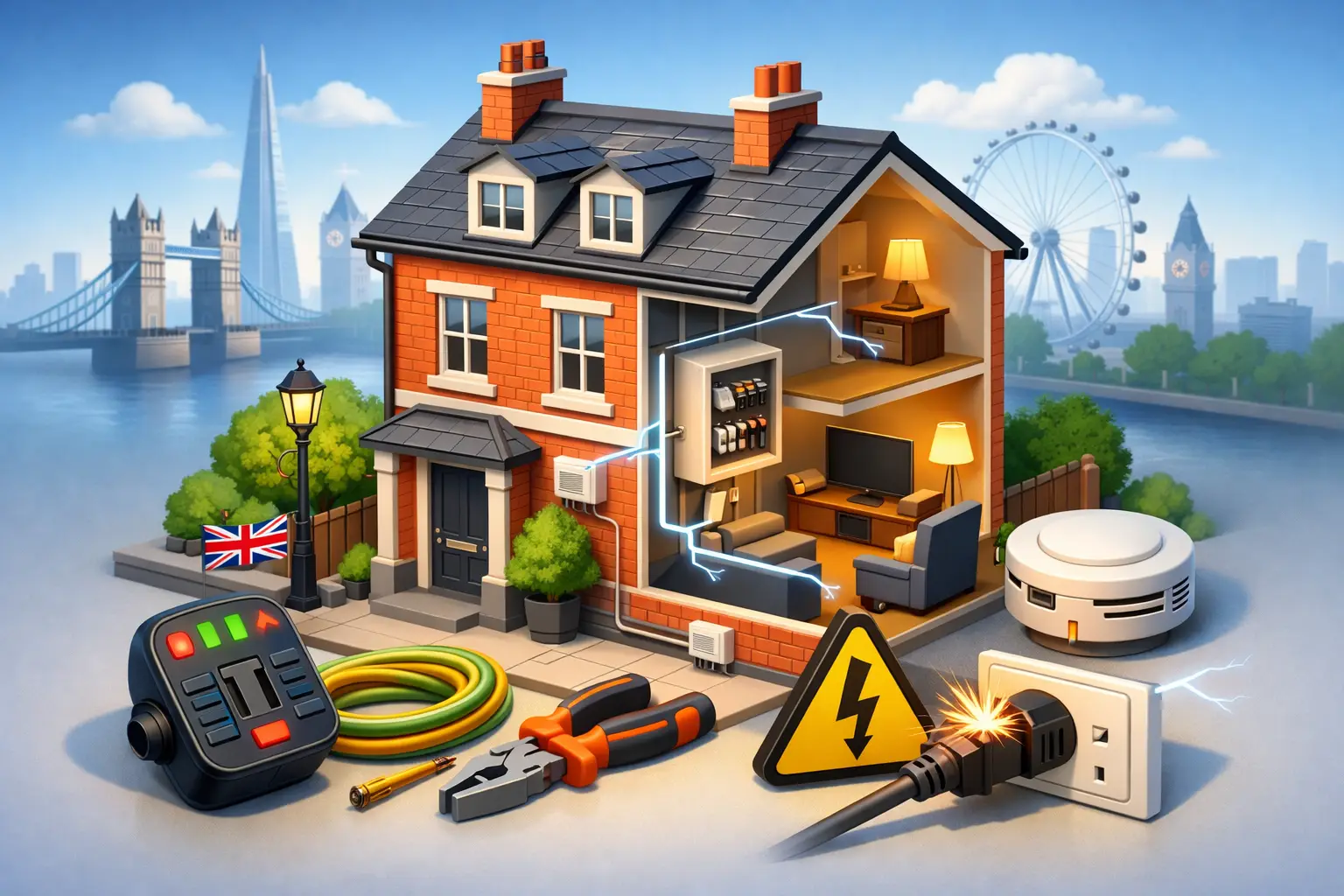
Our home electrical safety guide helps London homeowners and landlords spot hazards, protect occupants and know when to call a certified electrician early.

Learn how to spot faulty wiring in your London property, recognise urgent warning signs and know when to call a qualified electrician for safe...