
October 6, 2026

Learn how to maintain standby generators with practical checks, safe testing and professional servicing to protect London homes and business premises.







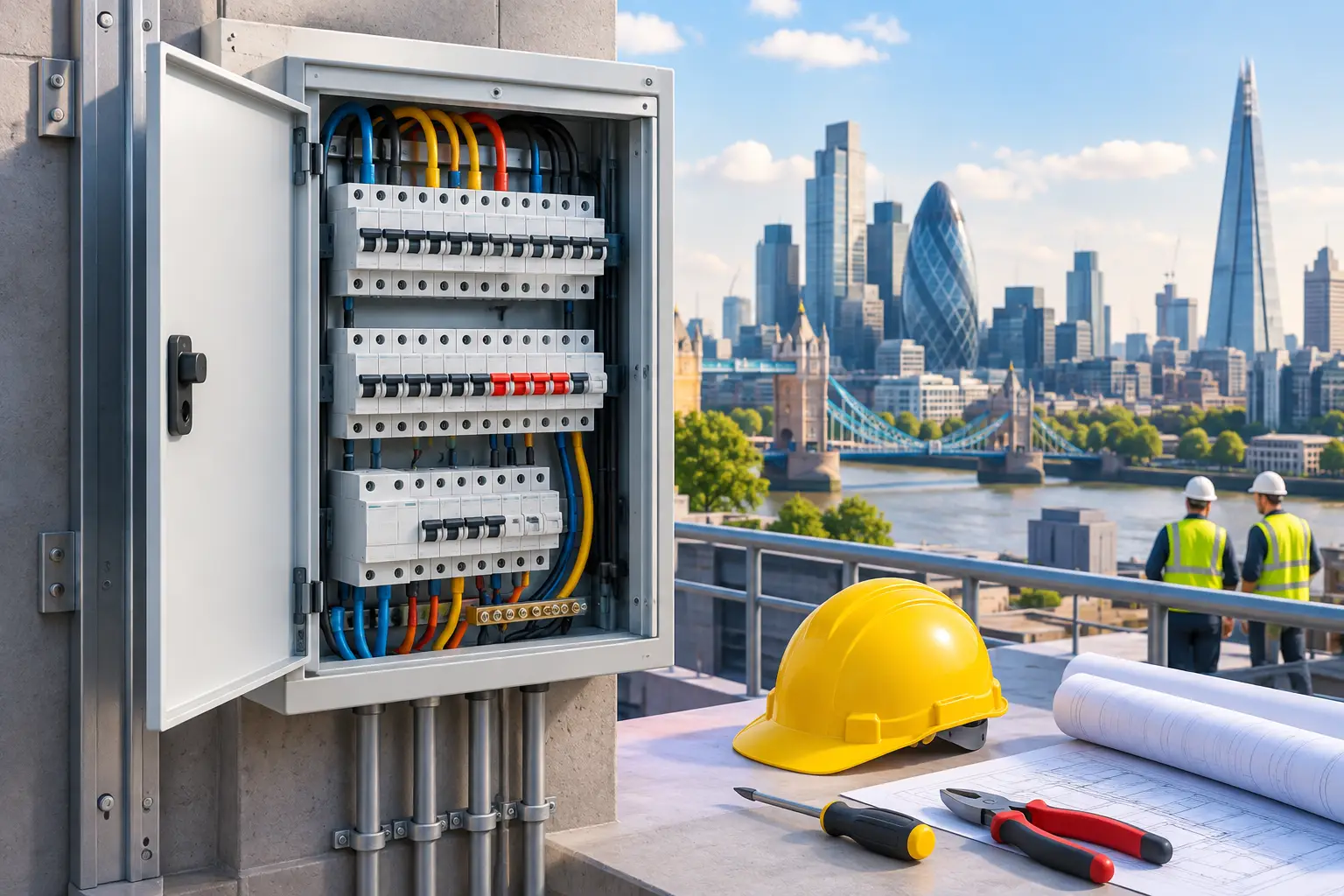
A commercial distribution board is rarely noticed until it causes a problem: a retail till loses power, office lighting trips during a busy afternoon, or a landlord discovers labelled circuits do not match the installation. This commercial distribution board guide explains what the board does, how it should be specified, and when a qualified electrician should inspect or upgrade it.
For London businesses, managing agents and property owners, the distribution board is central to electrical safety. It directs power from the supply to the circuits serving lighting, sockets, heating, ventilation, machinery and specialist equipment. A properly designed board helps limit the effect of a fault and makes isolation, maintenance and testing much safer.
Often called a distribution board, fuse board or electrical panel, this equipment divides an incoming electrical supply into protected outgoing circuits. Each circuit has a protective device chosen for its load, cable size and intended use. If a fault develops, that device should disconnect the affected circuit before cable damage, electric shock or fire can occur.
Commercial installations are more demanding than a typical domestic setup. A small office may need separate circuits for general sockets, emergency lighting, IT equipment and air conditioning. A restaurant could require dedicated supplies for refrigeration, extraction and cooking equipment. In a mixed-use building, the needs can extend to landlord services, communal lighting, fire alarm equipment, lifts and tenant supplies.
The board itself is only one part of the system. Its safety and performance depend on the condition of the incoming supply, earthing arrangement, cables, accessories, protective devices and the way circuits are used day to day.
There is no single board that suits every premises. Correct selection begins with a proper assessment of the current electrical load, likely expansion, the building environment and the consequences of downtime. Selecting a board solely because it has enough ways for today can create expensive limitations when a new tenant, additional air conditioning or EV charging is introduced later.
A board needs enough outgoing ways for the required circuits, but it should also allow sensible room for future work. Spare capacity is useful where a business expects to add workstations, display lighting, security systems or new equipment. It does not mean oversizing without purpose: the incoming supply, main switch rating, cable capacity and fault level must all be considered together.
Where a site has significant demand, a three-phase distribution board may be appropriate. Three-phase supplies can serve larger loads more efficiently and can help balance demand across phases. However, phase balancing needs careful design. Adding circuits unevenly can create operational issues and affect the available capacity for other equipment.
Modern boards commonly use circuit breakers and residual current protection. Circuit breakers protect against overloads and short circuits. Residual current devices, or RCDs, provide additional protection where earth leakage is detected. RCBOs combine both functions on an individual circuit.
For many commercial sites, individual RCBO protection provides a practical benefit: a fault on one circuit is less likely to shut down unrelated circuits. That can be particularly valuable where one nuisance trip could affect a payment terminal, refrigeration unit or critical IT equipment. The right arrangement still depends on the installation design, the type of connected equipment and the applicable standards.
Protective devices should also be coordinated so that, as far as practicable, the device closest to a fault operates first. This is known as discrimination. It reduces unnecessary disruption and makes fault finding more straightforward. It must be verified by a competent electrician, not assumed from the appearance of the board.
The location matters. A clean, dry office cupboard has different requirements from a plant room, warehouse, commercial kitchen or external service area. Dust, heat, moisture, corrosive conditions and physical impact can all affect the suitable enclosure type and installation method.
The board should be accessible for authorised persons but protected from casual interference and accidental damage. Blocking access with stock, storage units or furniture makes emergency isolation and routine maintenance harder. Clear labelling, adequate working space and suitable lighting around the board are equally important.
Commercial electrical work must be designed, installed and verified to the relevant requirements of BS 7671, commonly known as the IET Wiring Regulations. The Electricity at Work Regulations 1989 also place duties on employers and duty holders to ensure electrical systems are maintained to prevent danger.
Compliance is not a one-off document. A board may have been compliant when installed but later become unsuitable after alterations, increased loading or poor-quality additions. Common examples include circuits added without proper labelling, unused cables left in the enclosure, missing blanking plates, incompatible devices or a board that no longer has sufficient capacity.
A competent electrician should assess the supply characteristics, earthing and bonding, prospective fault current, maximum demand, diversity, cable routes and the requirements of the equipment being supplied. They should also consider fire safety, emergency systems and the need to maintain business operations while work is carried out.
On completion, the installation should be inspected, tested and certified. The documentation should be retained with other building records. For commercial landlords, managing agents and facilities teams, these records are particularly useful when arranging periodic inspection, changing tenants or investigating a fault.
Periodic inspection and testing identifies deterioration, defects and non-compliance that may not be visible during normal use. The result is generally recorded in an Electrical Installation Condition Report, or EICR. The appropriate inspection interval depends on the premises and how the installation is used. A high-traffic shop, workshop or restaurant may face more demanding conditions than a low-use office.
An EICR is not simply a check that switches operate. It may involve testing the condition and operation of protective measures, earthing, insulation, polarity, circuit protection and accessible connections. The electrician will also inspect the board enclosure, labels, signs of overheating and any previous alterations.
Between formal inspections, responsible staff should know where the board is located and how to report issues. They should not remove covers, reset repeated trips without investigation or attempt repairs themselves. A circuit that trips once may have experienced a temporary issue. A circuit that trips again is giving a clear reason to call an electrician.
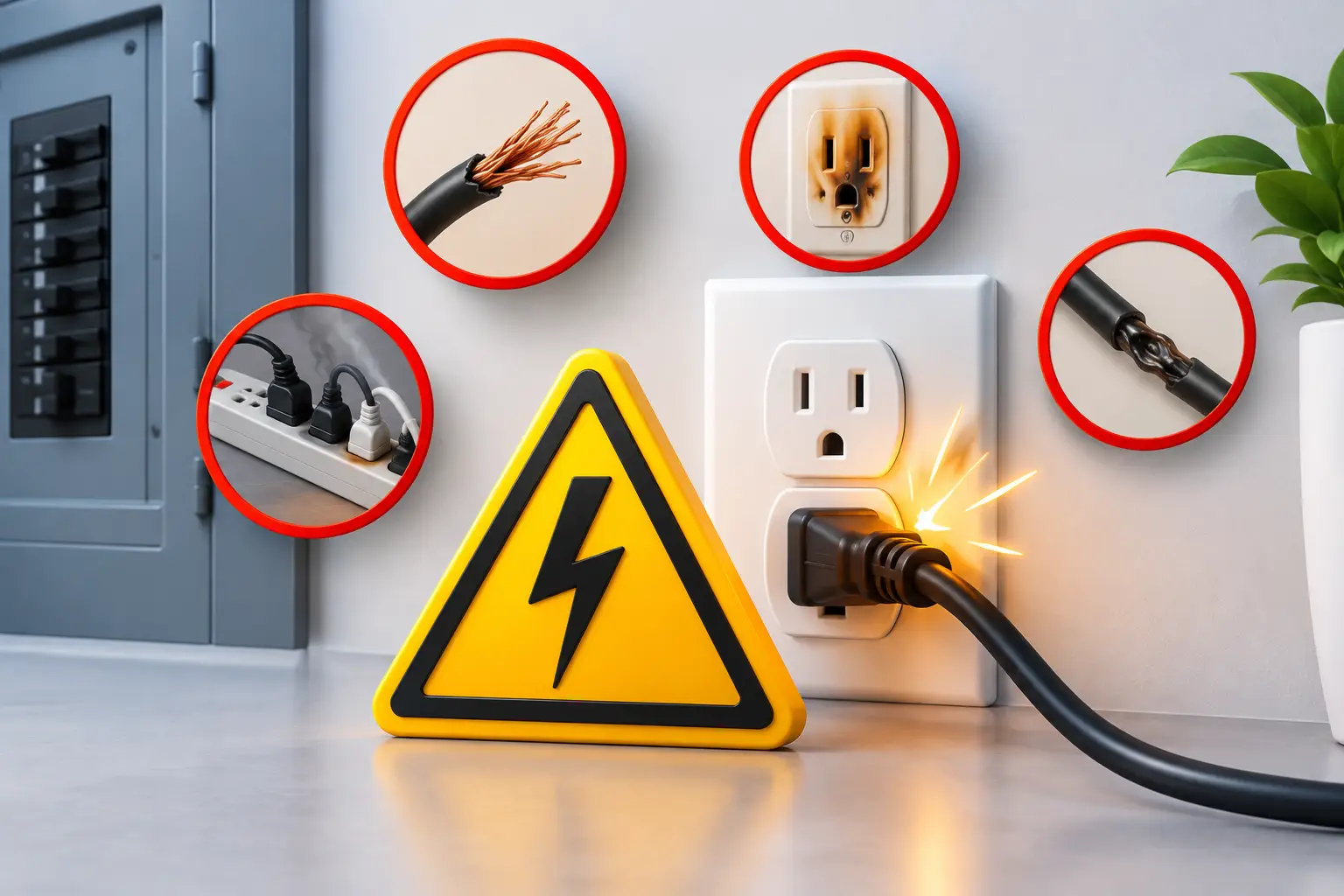
Electrical faults do not always announce themselves with a complete loss of power. Small changes can indicate a developing problem and should be dealt with before they become disruptive or dangerous. Arrange an inspection promptly if you notice:
If there is smoke, visible arcing, severe overheating or an electric shock incident, keep people away from the area and seek urgent professional assistance. Do not touch a damaged board or attempt to isolate it if doing so would place anyone at risk.
A distribution board upgrade can often be planned around a business’s operating hours, but it needs preparation. The electrician should survey the existing installation, identify critical circuits and agree how essential services will be managed during isolation. For some premises, temporary power arrangements or phased work may be appropriate.
It is also sensible to use the opportunity to review surge protection, circuit identification, emergency lighting supplies and capacity for future equipment. A cheaper like-for-like replacement may be adequate in some cases. In others, it simply preserves an outdated arrangement and leaves no room for the business to grow.
EDL Electrical can assess commercial distribution boards across London, explain the practical options clearly and carry out certified installation, testing and remedial work. The aim is not to replace equipment unnecessarily, but to provide a safe, maintainable installation that supports the way your premises actually operate.
A well-specified board gives you more than a row of switches: it gives your team a safer way to isolate faults, maintain essential services and plan changes without avoidable electrical risk.
Learn how to maintain standby generators with practical checks, safe testing and professional servicing to protect London homes and business premises.
Practical electrical safety advice for London homes and businesses, from warning signs and prevention to knowing when to call a certified electrician.

Are EICRs mandatory? Get clear guidance for London landlords, homeowners and businesses on legal duties, report dates, remedial work and safety checks.