





LED Versus Halogen Lighting for Your Property
A failed halogen downlight is rarely just an inconvenience. In a kitchen, office, shop or rental property, it can mean poor visibility, repeated lamp changes and unnecessary energy use. When comparing LED versus halogen lighting, the right choice depends on the fitting, the controls already installed and how the space is used – but LEDs are now the practical option for most properties.
Halogen lighting still has a place in a small number of specialist applications. However, for everyday lighting in London homes and commercial premises, upgrading to quality LED fittings or lamps usually delivers lower running costs, less heat and far fewer maintenance issues.
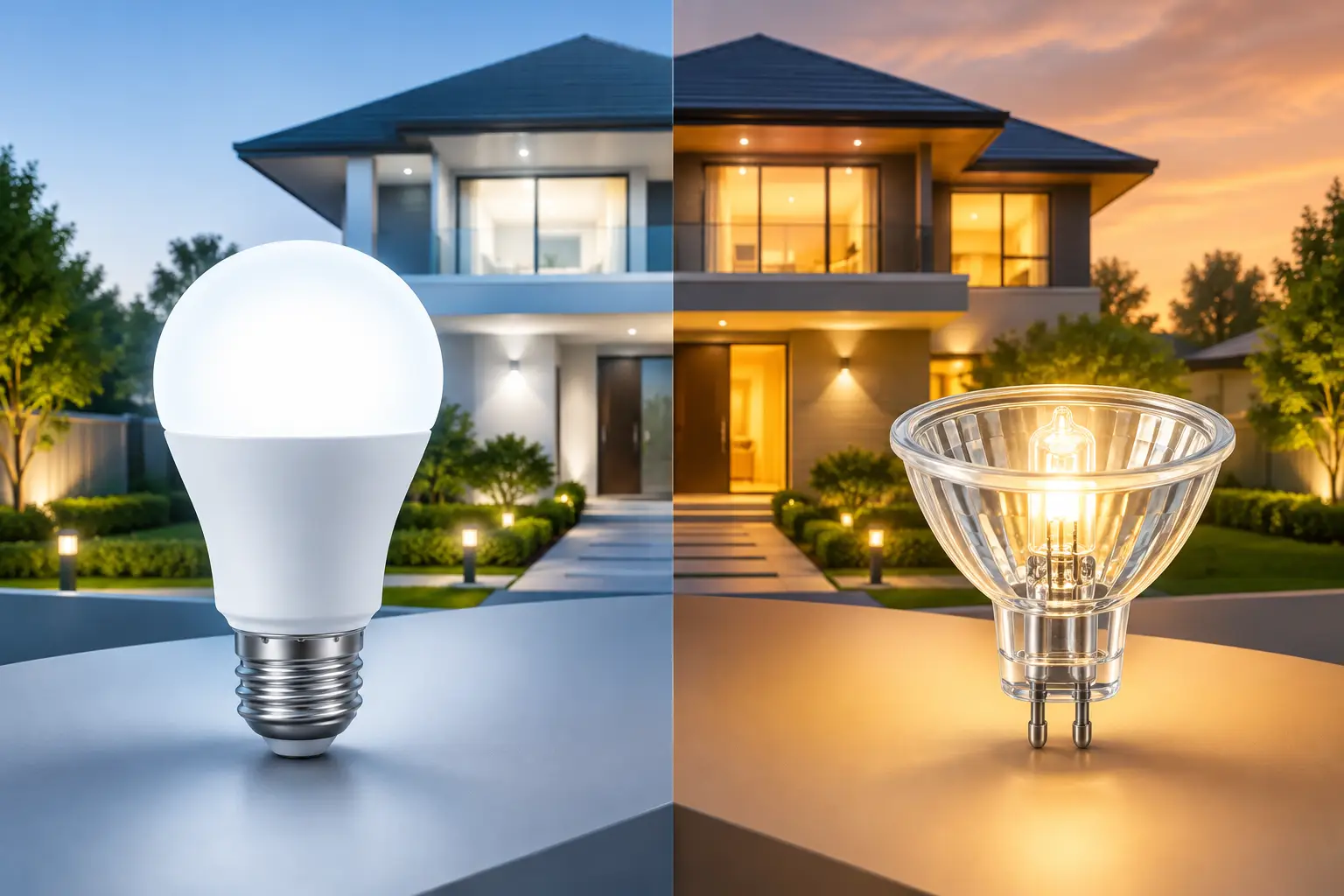
LED versus halogen lighting: the key difference
Both LED and halogen lamps can produce clear, attractive light, but they create it in very different ways. A halogen lamp uses a tungsten filament. Electricity heats that filament until it glows, with halogen gas helping it operate at a higher temperature than an older-style incandescent bulb.
An LED, or light-emitting diode, produces light electronically rather than by heating a filament. This is much more efficient. A large proportion of the electricity supplied to a halogen lamp becomes heat, whereas an LED converts more of it into useful light.
That difference matters in properties with multiple spotlights. Ten halogen downlights may not seem excessive, but their combined load can add up quickly when they are used for several hours each day. Replacing them with suitable LED equivalents can significantly reduce consumption while maintaining the same level of illumination.
Running costs and energy efficiency
For most property owners, energy use is the clearest reason to move away from halogen. A typical 50-watt halogen spotlight can often be replaced with an LED lamp using around 5 to 7 watts, depending on the required brightness and beam angle.
The exact saving depends on how long the lights are switched on and the electricity tariff. A bathroom light used for short periods will save less than a retail display, communal hallway or kitchen lighting used daily. Even so, the reduction is meaningful across a whole property.
LEDs also make more sense where lights are left on for extended periods. Landlords and commercial operators can reduce ongoing costs in corridors, reception areas, storerooms, kitchens and external lighting without compromising visibility. For security lighting, an LED fitting paired with an appropriate sensor can be particularly economical.
Upfront price should still be considered. Good-quality LED lamps and fittings can cost more than basic halogen replacements. The lower electricity use and much longer service life normally repay that difference, especially where access for replacement is difficult or requires a contractor.
Lifespan and maintenance requirements
Halogen lamps generally have a relatively short working life. Frequent switching, vibration, poor ventilation and heat build-up can shorten it further. In practical terms, this means more replacements, more disruption and a higher risk of mismatched lamp colours when replacements are fitted at different times.
A quality LED can last many thousands of hours, although lifespan claims should be treated sensibly. Heat management, product quality, enclosed fittings and electrical conditions all affect performance. Cheap LED lamps can flicker, lose brightness early or fail prematurely, so the lowest purchase price is not always the best value.
Integrated LED fittings deserve particular attention. With these units, the LED module is built into the fitting rather than supplied as a replaceable lamp. They can offer a neat finish and excellent light output, but a failed module or driver may mean replacing part or all of the fitting. In areas where easy future maintenance is a priority, a fitting with replaceable LED lamps may be preferable.
For landlords, fewer lamp failures can also reduce tenant reports and maintenance visits. For businesses, it helps keep customer-facing areas consistently lit and avoids staff changing lamps in unsuitable conditions.
Heat, safety and fire considerations
Halogen lamps run very hot. This is one reason they need suitable clearance from insulation, timber and other materials within ceilings. Recessed halogen downlights can create particular concerns if they are poorly installed, covered by insulation without suitable protection or fitted with incorrect lamps.
LEDs generate far less heat at the front of the lamp, but they are not heat-free. Their electronic components still need ventilation and must be installed in line with the manufacturer’s instructions. A recessed LED downlight should be correctly rated for its location, especially in bathrooms, kitchens and fire-rated ceilings.
Where a ceiling has been penetrated for downlights, fire protection and insulation compatibility are important. The fitting must preserve the required fire resistance of the ceiling where applicable, and cables, connectors and drivers must be safely housed. Simply swapping a lamp may be straightforward, but replacing fittings, altering wiring or dealing with overheating should be completed by a qualified electrician.
If lights are flickering, tripping a circuit, smelling hot or showing discolouration around a fitting, stop using them and arrange an inspection. Those signs may relate to the lamp, transformer, connection or wiring rather than the choice between LED and halogen alone.
Brightness, colour and light quality
Early LEDs earned a reputation for harsh, bluish light. Modern products are far more flexible. You can select warm white lighting for living rooms, bedrooms and hospitality settings, or neutral and cooler white tones for task areas, offices and utility spaces.
Do not choose a replacement based on wattage alone. Wattage indicates power use, while lumens indicate light output. A lower-wattage LED may provide the same or greater brightness than a halogen lamp. Beam angle matters too: a narrow beam is useful for highlighting artwork or merchandise, while a wider beam gives more even general lighting.
Colour rendering is another consideration. This measures how naturally colours appear under artificial light. In kitchens, bathrooms, retail environments and areas used for detailed work, a higher colour rendering rating can make a visible difference. Good lighting is not just about making a room brighter. It should make the space comfortable, functional and appropriate for its purpose.
Dimming and transformer compatibility
Dimming is where an LED upgrade needs a little more planning. Halogen lamps generally dim smoothly with compatible controls. LEDs can also dim well, but the lamp, driver and dimmer switch must be designed to work together.
Older low-voltage halogen spotlights often use a transformer. That transformer may require a minimum electrical load to operate correctly. When low-energy LED lamps are fitted, the total load may be too small, resulting in flickering, buzzing, flashing or lights that will not switch off fully.
In some cases, replacing the existing dimmer with an LED-compatible model solves the issue. In others, the transformer needs replacing with a suitable LED driver, or the fittings should be rewired and upgraded. It is not advisable to keep trying different lamps in the hope that the problem disappears. An electrician can assess the circuit and recommend a safe, reliable solution.
When halogen may still be suitable
There are limited circumstances where halogen remains useful. Some specialist light fittings, ovens, display systems or older equipment may require a specific halogen lamp. A property owner may also choose to retain halogen temporarily where an immediate upgrade would involve wider alterations.
However, availability is becoming more limited, and retaining high-energy lamps simply because they are familiar can create unnecessary running and maintenance costs. If a fitting is ageing, overheating or repeatedly failing, replacing the complete arrangement is often more sensible than continually replacing lamps.
Choosing the right upgrade for your property
A successful LED conversion starts with the existing installation. Check the lamp cap, voltage, fitting condition, enclosure, transformer arrangement, dimming controls and required light level. For bathrooms and outdoor spaces, check the correct IP rating as well.
For a straightforward lamp-for-lamp replacement, choose reputable LED lamps with the right brightness, colour temperature and beam angle. Where fittings are damaged, outdated or unsuitable for insulation, replacing them with properly rated LED fittings is the safer long-term option.
In larger homes, rental portfolios and commercial premises, it is worth reviewing lighting as a complete system rather than replacing failures one at a time. This allows consistent colour temperature, suitable emergency lighting where required, sensible switching arrangements and fewer future maintenance calls. EDL Electrical can assess existing lighting, identify compatibility issues and install compliant upgrades for properties across London.
The best lighting decision should leave the property safer, easier to maintain and more comfortable to use. A carefully selected LED upgrade does exactly that, while avoiding the hidden cost of repeatedly replacing hot, short-lived halogen lamps.