
October 20, 2026

Use this electrical load assessment guide to spot capacity risks, plan upgrades and keep London homes, rentals and workplaces safe and compliant now.







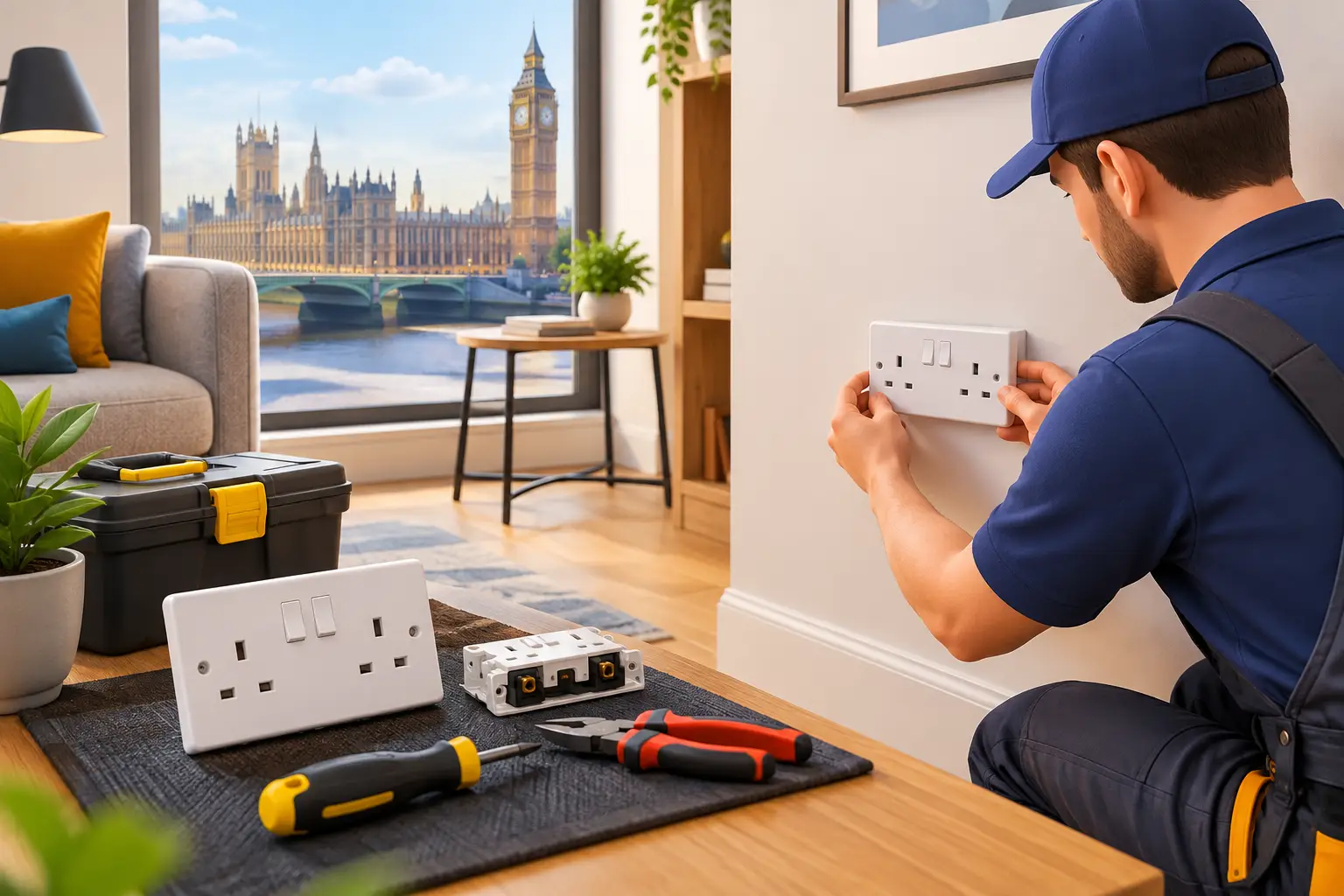
A new plug socket can make a kitchen safer, solve the problem of extension leads across a lounge, or support a growing office setup. This socket installation cost guide sets out what London property owners can expect to pay, what affects the final figure, and why the cheapest quote is not always the best value.
The cost to install a socket depends first on whether the electrician can extend an existing circuit safely or needs to create a new one. In London, a straightforward additional double socket fitted close to an accessible existing cable may commonly cost from around £150 to £300, including labour and standard materials. This is a guide price rather than a fixed charge.
Where cabling needs to be routed through walls, below floorboards or above ceilings, the price will rise. Installing a socket on a new circuit, upgrading protection at the consumer unit, or working in a commercial setting can take the total into the £300 to £600-plus range. Larger works, such as several new outlets during a refurbishment or rewire, are usually priced as a project rather than per socket.
A clear quotation should explain the labour, materials, testing and certification included. It should also state whether VAT applies. Comparing a like-for-like scope is far more useful than comparing one headline figure with another.
Every property has different wiring routes, wall finishes and circuit capacity. A qualified electrician will inspect the intended location before confirming the work required. The following factors have the greatest effect on the cost.
In a period property, access is often the main unknown. Older London homes may have solid walls, limited cable routes and wiring that has been altered over several decades. An on-site assessment helps prevent a low initial estimate becoming an unexpected variation once work has started.
A socket is a visible fitting, but the work behind it matters more. The electrician needs to identify the correct circuit, confirm that it is suitable for extension, isolate the supply safely, install appropriate cabling and protective devices, and test the completed work.
A standard white double socket is inexpensive, but cable, back boxes, trunking, fixings, RCD or RCBO protection, and other materials can add to the cost. Premium finishes such as brushed steel or black nickel also cost more than standard accessories. If you are matching sockets across a newly renovated room, it is worth choosing the fittings before requesting the quotation.
Testing is not an optional extra. After installation, the electrician should verify polarity, earth continuity, insulation resistance and the operation of protective devices as appropriate. The work should comply with BS 7671, the requirements for electrical installations. You should receive the relevant electrical certification for the work carried out.
For homes in England, certain electrical work is notifiable under Building Regulations. The requirements can vary according to the nature of the installation and its location, particularly where a new circuit or work in special locations is involved. A competent electrician can advise what applies to your property and ensure the correct paperwork is provided.
Sometimes an additional socket exposes a wider issue. If the existing circuit has signs of overheating, damaged cable insulation, poor earthing, repeated tripping or no modern residual-current protection, adding another point without investigating the cause would not be responsible.
An electrician may recommend repairs, a consumer unit upgrade or further testing before proceeding. This can change the original budget, but it protects occupants and the property. It also avoids installing a new fitting on a circuit that is already unsuitable for the load placed on it.
This is especially relevant in kitchens, home offices and rental properties. Kettles, microwaves, washing machines, portable heaters and computer equipment can place a sustained demand on circuits. A homeowner may only want one more socket, while the safest long-term solution may be to redistribute loads or install a dedicated circuit.
Landlords need to consider more than convenience. Electrical installations in rented homes must be maintained in a safe condition, and regular inspection and reporting obligations apply. A new socket should be properly tested and recorded alongside the property’s electrical documentation.
For offices, shops and mixed-use buildings, costs can depend on business continuity requirements. Work may need to take place outside trading hours, comply with site induction procedures, use metal containment, or coordinate with data cabling and fire-stopping measures. These details make a site survey particularly valuable.
Commercial installations may also involve higher-load equipment, three-phase supplies or more complex distribution arrangements. A quote should account for the required isolation, testing and reinstatement time, rather than treating the job as a domestic add-on.
The best way to manage cost is to be clear about the result you need. Tell the electrician where you want the sockets, what equipment will be used there and whether you prefer concealed wiring or accept neat surface trunking. Photos can help at the enquiry stage, but a visit may still be needed to confirm cable routes and circuit condition.
If you are renovating a room, arranging sockets, lighting and other electrical changes at the same time can reduce repeat visits and minimise disruption. Planning outlets before plastering, flooring or kitchen units are fitted is usually cheaper than altering finished surfaces later.
Avoid relying on multiway extension leads as a permanent solution. They can increase trip hazards, encourage overloaded outlets and conceal a lack of suitable fixed wiring. A professionally installed socket is often the safer and more practical option.
Before work begins, ask whether the price includes the socket accessory, cabling, testing, certification, waste removal and any making good. Confirm how any unforeseen issues will be handled and whether the electrician expects access to the consumer unit, loft, underfloor areas or neighbouring rooms.
It is also sensible to ask whether the existing circuit has been assessed for the intended load. This matters if the new socket will supply high-use equipment or if you have experienced tripping, flickering lights or warm sockets elsewhere in the property.
EDL Electrical provides certified electrical work across London, with clear assessments for planned installations and responsive support where an electrical fault needs urgent attention. A proper survey and written scope give you a price based on the condition of your installation, not an assumption.
A new socket should make your space easier and safer to use for years to come. Choose an electrician who will assess the circuit, explain the work plainly and leave you with tested, compliant installation work you can rely on.
Use this electrical load assessment guide to spot capacity risks, plan upgrades and keep London homes, rentals and workplaces safe and compliant now.

Choose a smart home installation electrician in London for safe, compliant lighting, security, heating and control systems that work reliably every day.

Understand PAT testing requirements for London homes, landlords and businesses, including legal duties, risk-based testing intervals and clear records.